Pre-purchase surveys and sea trials: what they cover and what they cost
What an Australian marine surveyor checks, what engine surveys and oil analysis add, typical costs and timing, and how to use the report to renegotiate.
A pre-purchase survey is the one part of buying a used boat where a few thousand dollars can save you tens of thousands. It is also the part buyers most often skimp on, by accepting the seller's old report, skipping the haul-out or treating an insurance survey as if it were a condition survey. This guide explains what a proper Australian pre-purchase survey covers, what it costs as of October 2026, and how to turn the report into a better deal.
Pre-purchase survey or insurance survey
They are different jobs. The Australasian Institute of Marine Surveyors (AIMS), the main professional body for surveyors in the region, describes a pre-purchase survey as a full condition survey that will generally include an out-of-water hull inspection and a sea trial, testing of major machinery and systems, and a written report with photographs. An insurance survey is shaped by what the underwriter wants to know about risk and value, and AIMS notes that it tends to be cursory by comparison. A pre-purchase report will usually satisfy an insurer; an insurance report will not tell a buyer what they need to know.
AIMS also points out that there is no industry standard for exactly what each type of survey includes, and no licensing for recreational-vessel surveyors. That makes two things essential: choosing the surveyor carefully, and agreeing the scope in writing before the work starts. AIMS publishes a standard terms-of-engagement agreement that buyers can use.
When you choose a surveyor:
- appoint them yourself, and make sure they have no relationship with the broker or seller
- check professional membership (AIMS or the International Institute of Marine Surveying) and professional indemnity insurance
- ask for a sample report from a similar boat
- confirm whether they cover the engines or whether you need a separate marine mechanic
- confirm they work on your type of boat: some surveyors specialise in power, others in sail or multihulls
The hull, out of the water
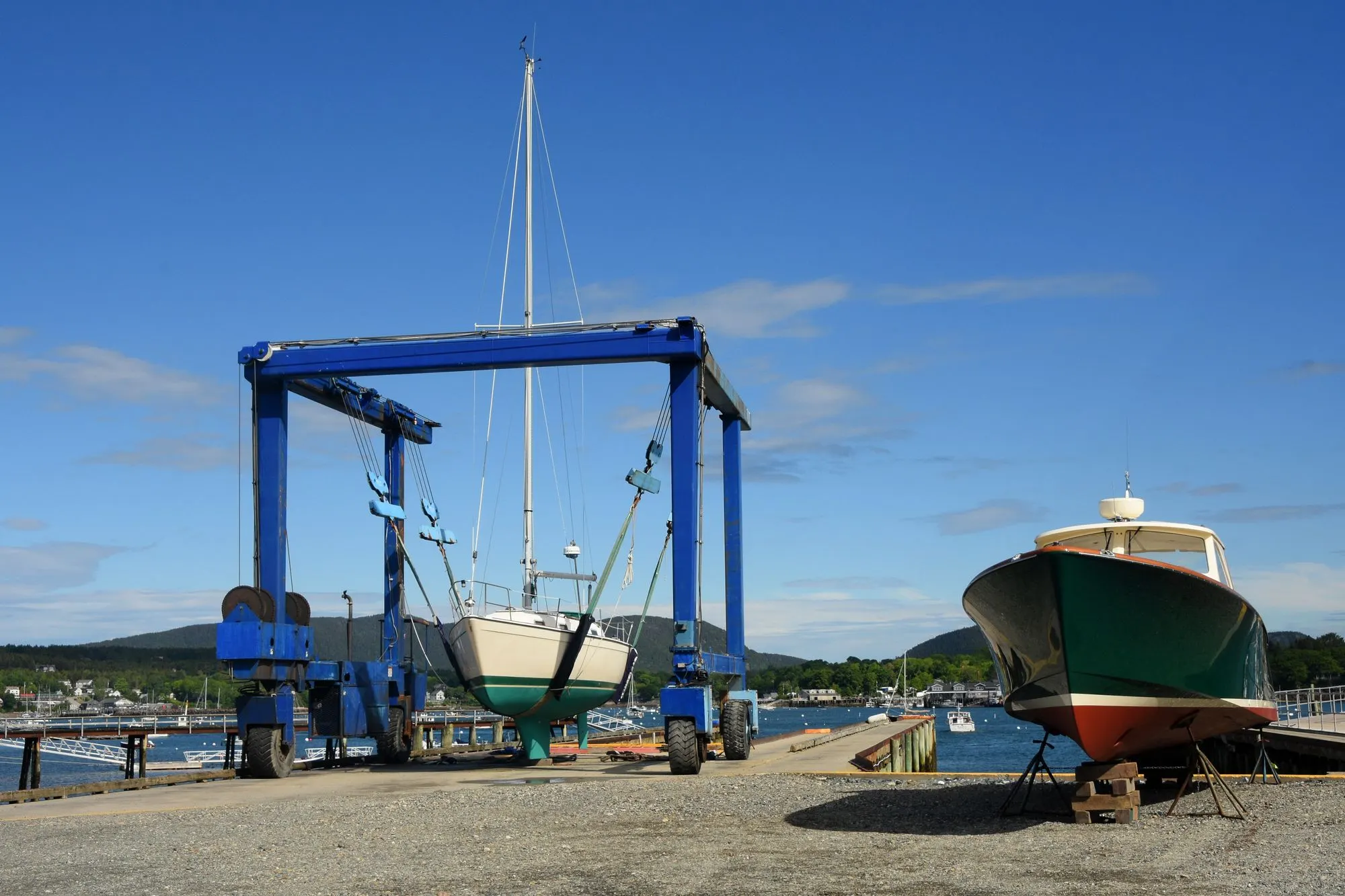
A boat sitting at its berth hides most of what matters. The hull below the waterline, the running gear and the through-hull fittings can only be properly assessed with the boat lifted, which is why the haul-out is not optional for a serious survey.
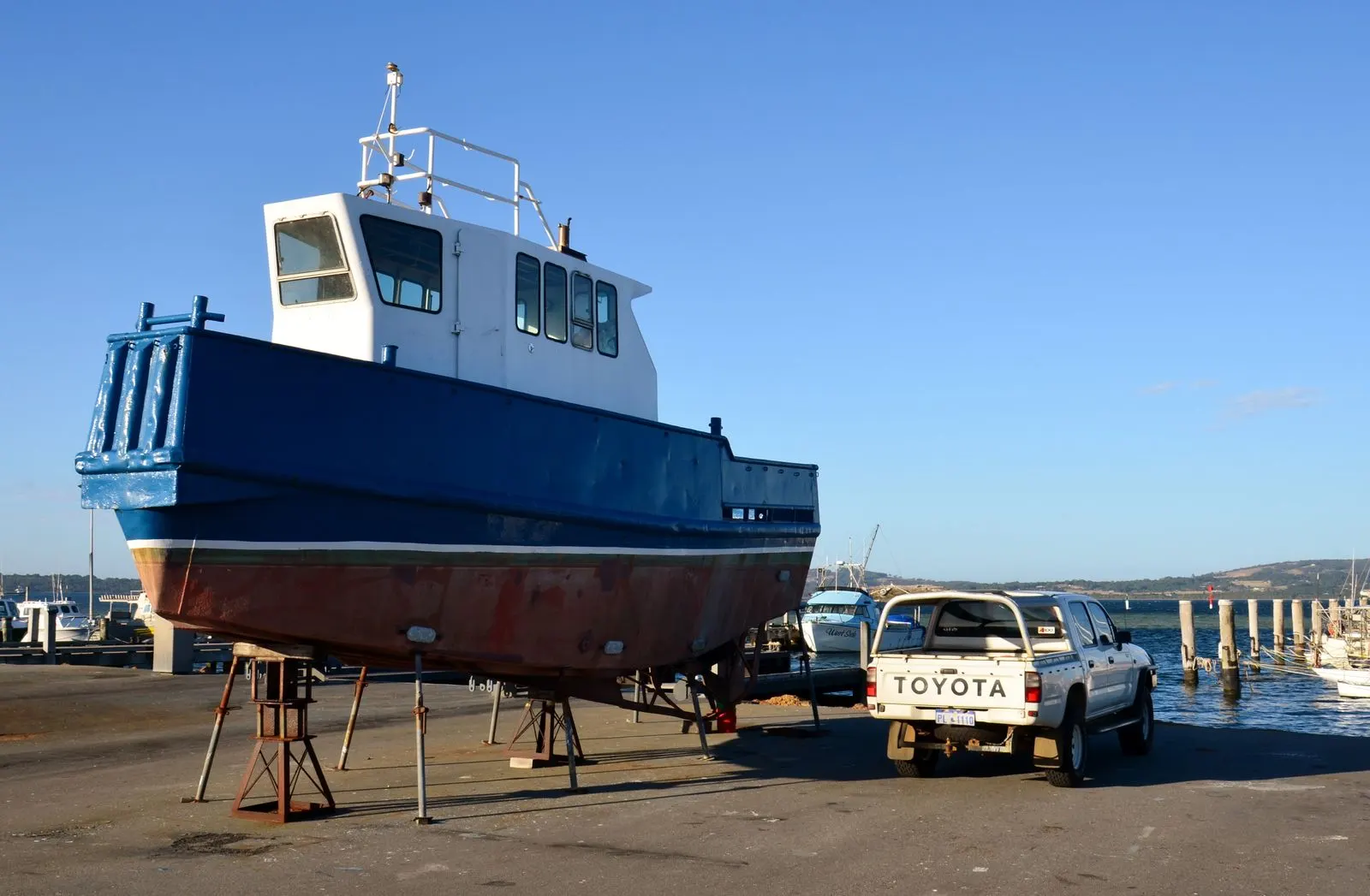
On a fibreglass boat the surveyor will typically:
- Sound the hull with a phenolic hammer, listening for the dull note of delamination or a failed core.
- Take moisture readings with a meter across the hull bottom, topsides and decks. The readings are relative, not absolute, so the surveyor compares areas against each other and against dry reference points. A boat lifted that morning will read higher than one that has dried for a few days, which is worth remembering when you book the lift.
- Look for osmosis, the blistering that develops when water migrates into the laminate. Small cosmetic blisters and deep laminate blistering are very different problems; the report should say which you have.
- Check the keel and its attachment on sailing yachts, including the keel-to-hull joint and visible signs of a past grounding.
- Inspect through-hull fittings and seacocks, which should operate freely and show no corrosion or weeping.
Running gear
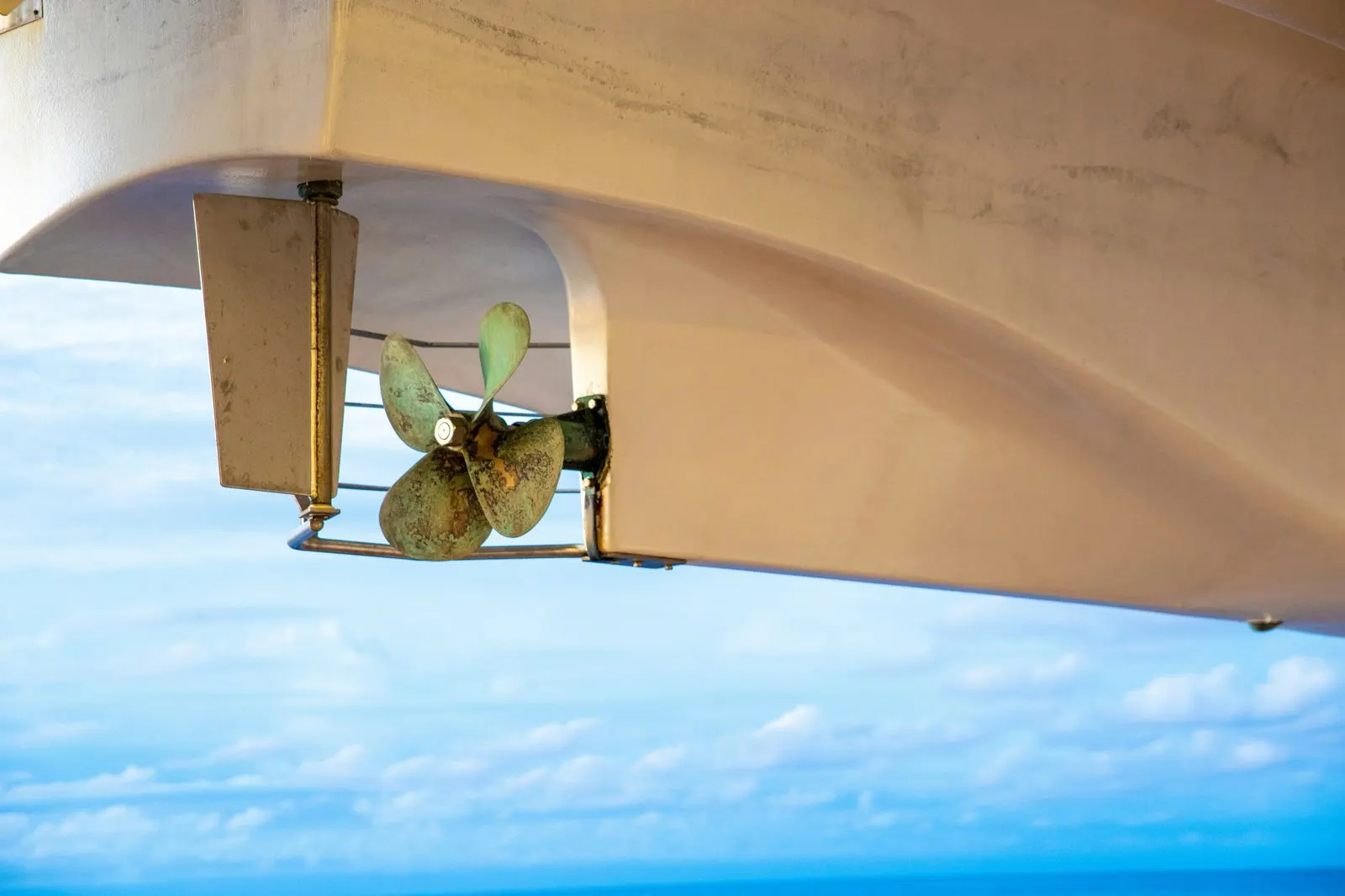
Shafts, cutless bearings, P-brackets, propellers, rudders and rudder bearings are checked for play, damage and electrolysis. Sacrificial anodes tell their own story: anodes that are badly eroded a few months after replacement can point to stray-current or bonding problems that need investigating. On sterndrives and pod drives, the leg or pod, bellows and seals get the same attention. If you are still weighing up drive types, see shaft, sterndrive or pod.
Inside: systems and safety
Back on board, the surveyor works through the systems that can sink, burn or poison a boat.
- Electrical: battery installation and isolation, cable condition and protection, the separation of AC and DC systems, shore-power inlet and RCD protection. Australian recreational boat installations are covered by AS/NZS 3004.2.
- Gas: LP gas installations in boats are covered by AS/NZS 5601.2. The surveyor looks at the cylinder locker and its overboard drain, the regulator, hoses, the solenoid, any gas detector and the condition of the appliances. Faults here are safety items, not bargaining chips.
- Fuel: tanks, fills, vents and lines, particularly flexible hoses that have aged.
- Bilge pumps and float switches: tested, not just looked at.
- Steering and controls: hydraulic steering for leaks, cables for stiffness, and the full movement of the helm.
- Safety equipment: lifejackets, flares, EPIRB registration and expiry dates, fire extinguishers and their service tags.
Engines: survey, mechanic and oil analysis
Most hull surveyors are not marine mechanics, and on a power boat the engines are often the most expensive single item you are buying. For anything with inboard diesels it is worth engaging a marine mechanic who knows the engine brand, either through the surveyor or separately.
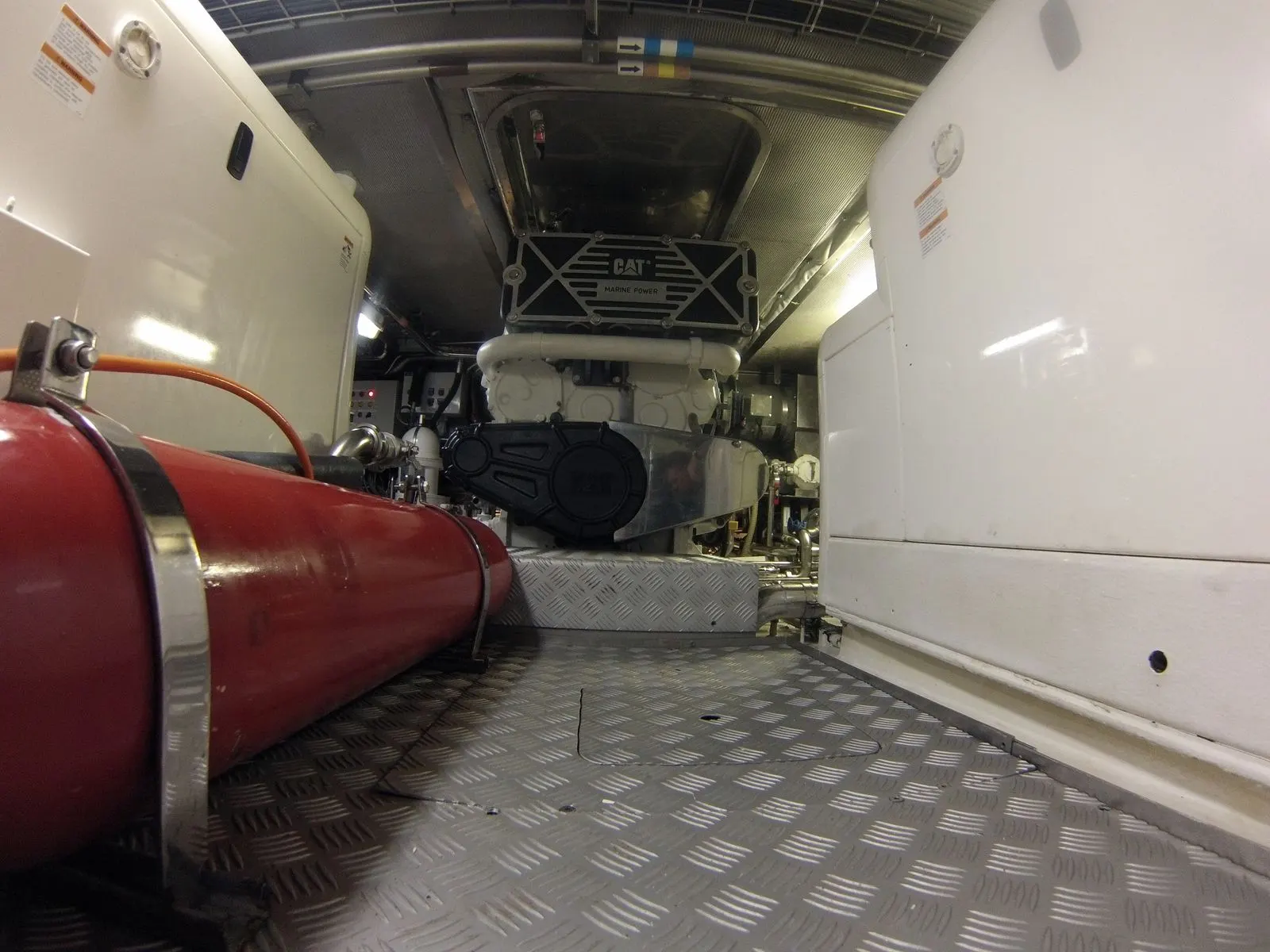
A mechanical inspection typically includes:
- a cold start, checking for smoke, hard starting and unusual noise
- a visual inspection for leaks, corrosion, chafed hoses and loose mounts
- a look at fluids: engine oil, coolant, gearbox oil and, where fitted, power steering and trim oil
- reading any stored fault codes on electronically controlled engines
- compression testing on petrol engines and outboards where practical
- running under full load during the sea trial
Oil analysis adds evidence that cannot be seen. A sample of engine or gearbox oil is sent to a laboratory, which reports wear metals, contaminants such as coolant or fuel, and the condition of the oil. One Queensland surveyor lists oil analysis from A$199 in 2026, with results in three to six working days. A single sample is a snapshot rather than a trend, so it is best read alongside the service history, but high coolant or fuel readings are a clear warning.
The sea trial
The sea trial is where everything is tested together. Ask for a trial long enough to bring the engines to full operating temperature, and in conditions that resemble how you will use the boat.
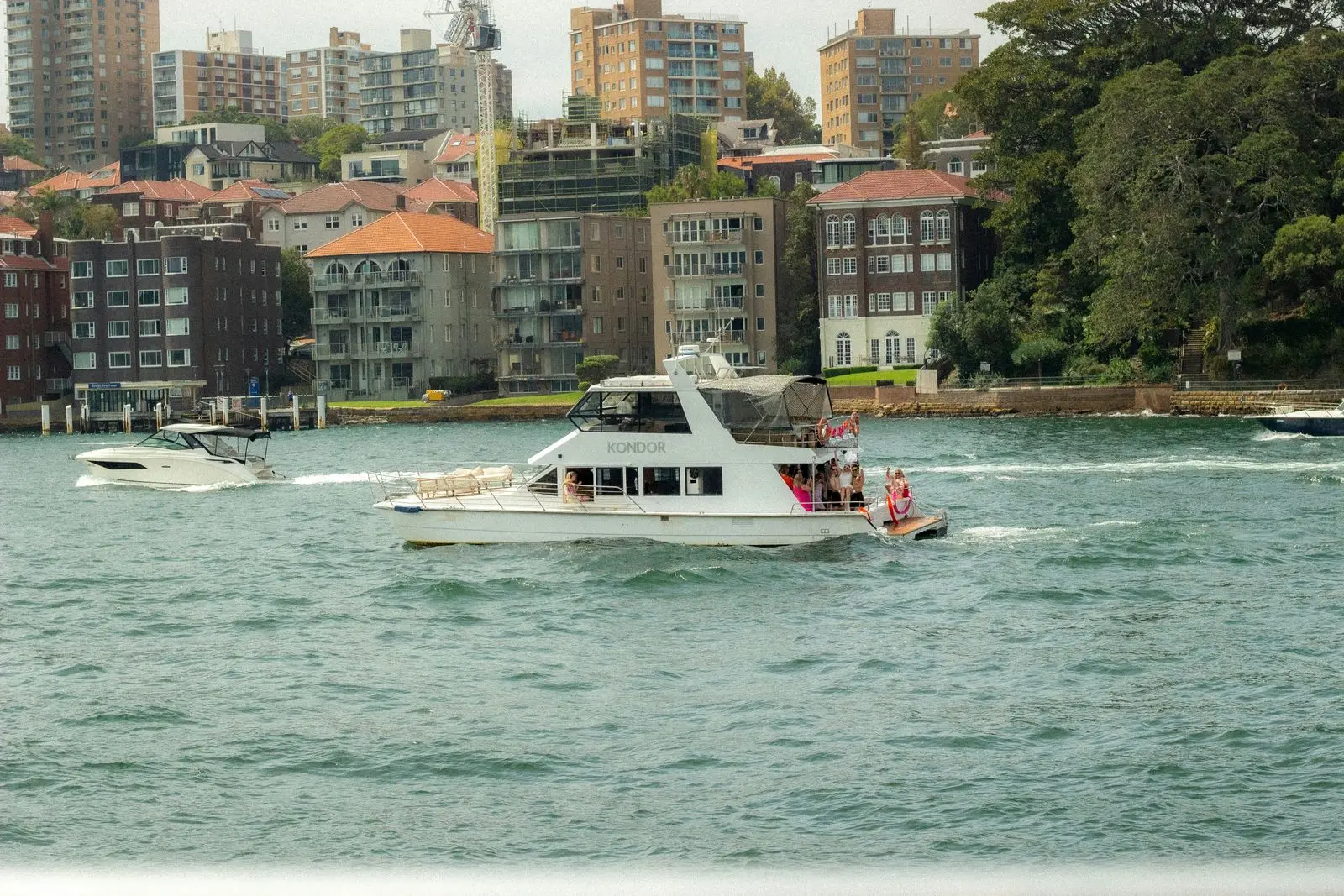
During the trial the surveyor or mechanic will usually check:
- that each engine reaches the manufacturer's rated maximum RPM at wide-open throttle
- temperatures and oil pressures at cruise and at full load
- exhaust smoke at start-up, under acceleration and at cruise
- vibration at different speeds, which can point to shaft, propeller or mount problems
- steering, trim tabs, thrusters and autopilot
- gearbox engagement, ahead and astern
- the bilges and engine space after a hard run, looking for new leaks
Note: until settlement the boat belongs to the seller. Agree beforehand who will be at the helm during the trial and confirm that the seller's insurance covers it.
Typical costs and timing
Costs depend on length, construction, the number of engines and how much the survey covers. These are indicative ranges from published Australian price lists in 2026; always get a written quote.
| Item | Typical cost | What drives it |
|---|---|---|
| Pre-purchase hull and systems survey | About A$25 to A$40 per foot (Sydney and Gold Coast lists); fixed fees of about A$800 to A$1,500 for 18 to 55 ft in Brisbane | Length, age, scope, travel |
| Insurance survey (for comparison) | About A$14 to A$18 per foot | Insurer's requirements |
| Haul-out for survey | For example A$335 for under two hours (RQYS, visitor rate, November 2025) | Yard, boat size, lift and hold time |
| Marine mechanic | Commonly A$100 to A$180 per hour | Number and type of engines |
| Oil analysis | From about A$199 per sample | Number of samples |
On timing, allow a week or two from accepted offer to completed report. Lift slots are the usual bottleneck, especially before the summer season. The inspection itself on a 12 to 15 m boat usually takes most of a day including the sea trial, and surveyors commonly deliver reports within a few working days. Make sure the survey deadline in your contract allows for this.
Who pays: the buyer pays for the survey, and the haul-out usually forms part of the buyer's bill. If the seller has agreed to a lift for the survey, confirm in writing who pays for the launch and any hardstand time.
Reading the report
A good report describes the condition of each item rather than just listing equipment, and it ranks findings by urgency. Typical categories are:
- Safety and seaworthiness: must be fixed before the boat is used (a seized seacock, a gas leak, failed steering).
- Significant defects: affect value or will become expensive (osmosis needing treatment, engine wear, a delaminated deck).
- Maintenance and cosmetic items: expected on any used boat.
Read the limitations section carefully. Surveyors note what they could not access, test or see, and anything listed there is unverified. If something important was excluded, such as a fuel tank behind joinery or the rigging on a sailing yacht, ask whether it can be inspected separately.
Renegotiating on the findings
The report is a negotiating document. When you go back to the seller:
- get written quotes for the significant items so the numbers are real, not guesses
- separate safety items, which you can reasonably ask the seller to fix or price in, from routine maintenance, which was already reflected in the asking price
- offer a choice: a price reduction, or agreed repairs completed and inspected before settlement
- keep to the deadlines in your contract, so your right to withdraw does not lapse while you negotiate
If the findings are serious, withdrawing under your survey condition is often the best result the survey can deliver. For the whole purchase sequence, from offer to settlement, see buying a used yacht in Australia; sailors should also read buying a used sailing yacht for rig and sail checks. When you are ready, search current listings or browse by category.
Sources
- Australasian Institute of Marine Surveyors, Pre-purchase vs insurance vessel surveys
- Australasian Institute of Marine Surveyors
- BoatBuy, How much does a marine survey cost?
- Maritime Surveyor (Brisbane, Gold Coast and Mooloolaba), Vessel size and cost
- Maritime Survey Australia, Who pays for a marine survey?
- RQYS Marina, Boatyard price list, November 2025
- Standards Australia, AS/NZS 3004.2 Electrical installations, marinas and boats, recreational boat installations
- Standards Australia, AS/NZS 5601.2:2020 LP gas installations in caravans and boats
Information is general and current at the time of writing. Check with the authority or a professional before you rely on it.