Buying a used yacht in Australia: the complete checklist
From first viewing to settlement day, the steps, paperwork and costs that matter when you buy a second-hand boat in Australia.
Buying a used boat in Australia is less regulated than buying a house or even a used car. There is no cooling-off period written into law for a private sale, no compulsory inspection and, in most cases, no statutory warranty. What protects you is the order in which you do things and the conditions you write into the deal. This checklist follows a typical purchase from the first look to the day the boat is yours, with the costs and paperwork you should expect along the way, as of October 2026.
1. Set the real budget before you look
The asking price is the smallest part of the decision you are about to make. Before you shortlist anything, put numbers against the costs that arrive in the first year:
- Purchase costs: pre-purchase survey, haul-out for the survey, engine inspection and oil analysis, registration transfer fee, and any immediate repairs the survey turns up.
- Holding costs: marina berth, swing mooring or dry stack, insurance, annual registration, antifouling and slipping, servicing.
- Running costs: fuel, which on a twin-diesel flybridge cruiser can outweigh everything else if you use the boat hard.
- A contingency: used boats almost always need something in the first season. Hold back money for it rather than spending it all on the purchase price.
Our guide to the cost of owning a 15 m flybridge breaks down a typical year, and marina berths in Australia covers what a berth costs and how hard one is to find in each capital. If you are borrowing, sort out pre-approval first; boat finance and insurance explains how lenders and insurers look at older vessels.
2. Shortlist with intent
Decide how you will use the boat before you fall for one. Day trips on the harbour with family, weekends at anchor in Pittwater or the Whitsundays, and coastal passages each point to different hulls, layouts and propulsion. If you are still deciding on type, start with flybridge, sports yacht or motor yacht, power catamaran or monohull and shaft, sterndrive or pod. Sailors should read buying a used sailing yacht.
Use search and browse categories to compare like with like. A short list of three to five boats is enough. For each, ask the seller or broker for:
- the registration certificate and Hull Identification Number (HIN)
- service records, including engine hours at each service
- the date and yard of the last haul-out and antifoul
- any previous survey reports
- an inventory of what is included: tender, outboard, covers, safety gear, electronics
Gaps in the history are not automatically a deal-breaker, but they shift more weight onto the survey.
3. The first viewing
A first viewing is not a survey. Its job is to tell you whether the boat is worth spending survey money on. Go in daylight, take a torch, and look at what the seller has not had time to tidy.
- Bilges: oil, coolant or fuel in the bilge, or a bilge that has been scrubbed suspiciously clean.
- Engine space: corrosion on exhaust elbows and heat exchangers, weeping hoses, white salt crust, and whether the engines are cold when you arrive. Ask for a cold start.
- Deck and superstructure: cracks around stanchion bases and fittings, soft spots underfoot, and water staining inside lockers and headlinings.
- Windows and hatches: leaks show up as staining and swollen joinery below them.
- Electrics: a tidy switchboard and labelled circuits are a good sign. A tangle of added wiring is not.
- Smell: diesel, mould or a strong holding-tank odour all point to work.
Ask why the owner is selling and how the boat has been used. A boat that has spent ten years on a marina berth with regular use and servicing can be in better health than a low-hours boat that sat neglected.
4. Make an offer with conditions
In Australia the usual approach is a written offer accompanied by a deposit, commonly around 10 per cent, with the sale conditional on the buyer's satisfactory survey and sea trial. Brokers generally have their own agreement forms. Whoever drafts it, make sure the written agreement says:
- the price and exactly what is included in it
- that the sale is subject to a pre-purchase survey and sea trial satisfactory to the buyer, with a deadline for each
- that the deposit is refunded in full if you withdraw on those conditions
- where the deposit is held (a broker's trust account rather than a private bank account)
- the settlement date and how the boat is to be handed over
- who pays for the haul-out and whether the seller will return the boat to the water
The ACCC's consumer guarantees cover goods bought from a business, including second-hand goods, but most of them do not apply to a one-off private sale. Even in a private sale the seller must give you clear title, undisturbed possession and freedom from undisclosed debts or charges. Before you hand over the deposit, run a PPSR search on the HIN to check the boat is not under finance. If the contract is complex or the money is large, have a solicitor read it.
5. Survey and sea trial
This is the step that protects you most. A pre-purchase survey is a full condition survey; it is not the same as the insurance survey an underwriter may ask for. The Australasian Institute of Marine Surveyors notes that pre-purchase surveys generally include an out-of-water hull inspection and a sea trial, while insurance surveys "tend to be quite cursory" by comparison.
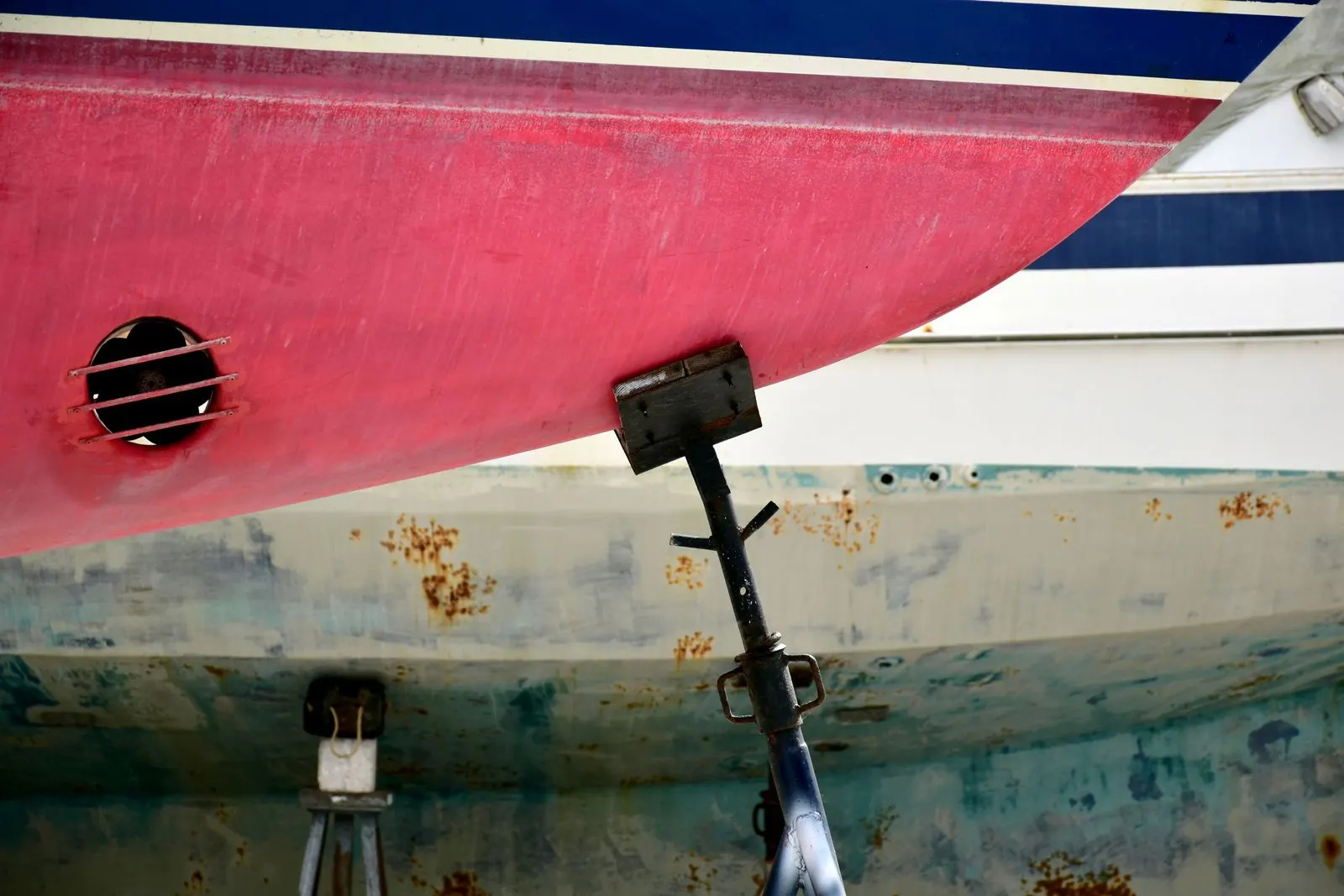
Budget for it properly. Published Australian price lists in 2026 put a pre-purchase survey at roughly A$25 to A$40 per foot in Sydney and on the Gold Coast, depending on age, engine count and scope, and one Brisbane surveyor lists fixed fees of about A$800 to A$1,500 for boats between 18 and 55 feet. The haul-out is extra: as one example, the Royal Queensland Yacht Squadron's November 2025 price list charges visitors A$335 for a survey lift of under two hours. Engine inspections and oil analysis add more. Our guide to pre-purchase surveys and sea trials covers what is checked, how long it takes and how to use the report to renegotiate.
Choose the surveyor yourself. A broker's recommendation is fine as a starting point, but the surveyor works for you and should have no relationship with the sale.
6. Renegotiate or walk away
Surveys on used boats always find something. Sort the findings into three piles: safety items that must be fixed before the boat goes to sea, items that affect value (osmosis, engine wear, failing equipment), and routine maintenance. Use the first two piles to renegotiate, either as a price reduction or as work the seller completes before settlement. If the report finds structural damage or major engine problems, your conditions let you withdraw and recover the deposit; that is what you wrote them for.
7. Settlement
On settlement day you pay the balance and receive the boat, its keys, documents and the signed registration paperwork. Have this ready:
- a bill of sale or receipt with both parties' names and signatures, the date, the price, the HIN and a description of the vessel, marked as paid in full
- the original registration certificate, signed by the seller where the state's form requires it
- manuals, service records, spare keys and the inventory list ticked off on board
Note: a few states require more. In Tasmania, both buyer and seller sign a declaration that the vessel is not unsafe as part of the transfer.
8. Transfer the registration
Every state that registers recreational boats sets a short deadline for transfer. In NSW, Queensland, South Australia and Tasmania the buyer has 14 days from purchase, and late fees or fines can apply. The seller usually lodges a notice of disposal, and stays responsible for the boat until the transfer goes through. Rules on which boats need registration, and how interstate boats are handled, vary widely; boat licences and registration by state sets them out side by side. If you are buying overseas, see importing a boat into Australia.
9. Insurance from the day you own it
Arrange cover before settlement and make it start on the settlement date, not when you get around to it. Once you have paid, the risk is yours: a fire at the berth or a storm the following week is your loss if the policy is not yet in force. Most marinas also require proof of insurance before they will give you a berth. Tell the insurer about the survey findings, because an underwriter that later discovers an undisclosed defect may reduce or refuse a claim. Boat finance and insurance covers agreed-value and market-value policies and what insurers ask for on older boats.
10. Delivery
If the boat is not where you plan to keep it, you have three options:
- Take it yourself: realistic for a harbour or short coastal hop if you have the licence, the experience and an up-to-date chart plotter. Check the weather and bar crossings, and make sure your insurer covers the delivery voyage.
- Use a delivery skipper: the usual choice for an unfamiliar boat on a long coastal passage. Ask for their qualifications and insurance, and plan to go along so you learn the boat.
- Road transport: practical for trailerable and smaller boats. Anything wider than 2.5 m is an oversize load and needs permits, so get quotes early.
The checklist in one place
| Stage | What to do | Typical timing |
|---|---|---|
| Budget | Price the survey, berth, insurance and first-year contingency | Before you shortlist |
| Shortlist | Three to five boats; get registration, HIN and service history | 1 to 4 weeks |
| Viewing | Cold start, bilges, engine space, leaks, electrics | 1 to 2 hours per boat |
| Offer | Written, with deposit refundable subject to survey and sea trial | Same week |
| Survey and sea trial | Independent surveyor, out-of-water hull, engine checks | 1 to 2 weeks to arrange |
| Renegotiate | Use the report to adjust price or agree repairs | A few days |
| Settlement | Bill of sale, signed registration papers, keys, documents | Agreed date |
| Registration | Transfer in the buyer's name | Usually within 14 days |
| Insurance | Cover starting on settlement day | Before settlement |
| Delivery | Self, delivery skipper or road transport | After settlement |
Work through it in order and you will rarely be surprised. When you are ready to start looking, search the current listings.
Sources
- ACCC, Consumer rights and guarantees
- Australasian Institute of Marine Surveyors, Pre-purchase vs insurance vessel surveys
- Transport for NSW, Transfer vessel registration
- Transport for NSW, How to register a vessel
- Queensland Government, Register a boat
- SA.GOV.AU, Transfer a boat registration
- Marine and Safety Tasmania, Buying a motor boat (notice of disposal)
- BoatBuy, How much does a marine survey cost?
- Maritime Surveyor (Brisbane, Gold Coast and Mooloolaba), Vessel size and cost
- RQYS Marina, Boatyard price list, November 2025
Information is general and current at the time of writing. Check with the authority or a professional before you rely on it.