Buying a used sailing yacht: what to inspect
Keel, deck core, rig, sails, engine and safety gear, plus Australian Sailing categories and how to run a survey and sea trial under sail.

A sailing yacht is a simpler machine than a motor cruiser in some ways and a far more demanding one in others. The engine works less hard, but the boat carries a rig under tens of thousands of newtons of load, a keel hanging from a handful of bolts, and a deck that flexes every time it is loaded. A good used yacht can give decades of service. A tired one can need its rig, sails and engine replaced in the same year, which can approach the value of the boat.
This guide walks through what to inspect, in roughly the order a surveyor would, with notes on Australian safety categories and how to run a sea trial under sail. It is current as of October 2026. Read it alongside our general checklist for buying a used yacht in Australia.
Start with the history
Before you look at the boat, ask for the paper trail: registration, builder's plate and hull identification, the owner's manual, receipts for rigging, sails and engine work, previous survey reports, insurance claims and any racing history. A boat that has done several Sydney to Hobarts or Brisbane to Gladstones has been well equipped and hard used. A boat that has sat on a mooring for five years has avoided wear and suffered neglect. Both stories show up in the paperwork.
Ask directly whether the boat has ever grounded, and when the keel was last dropped or the bolts last checked. A straight answer is a good sign. Vagueness is a reason to look harder.
Hull and keel
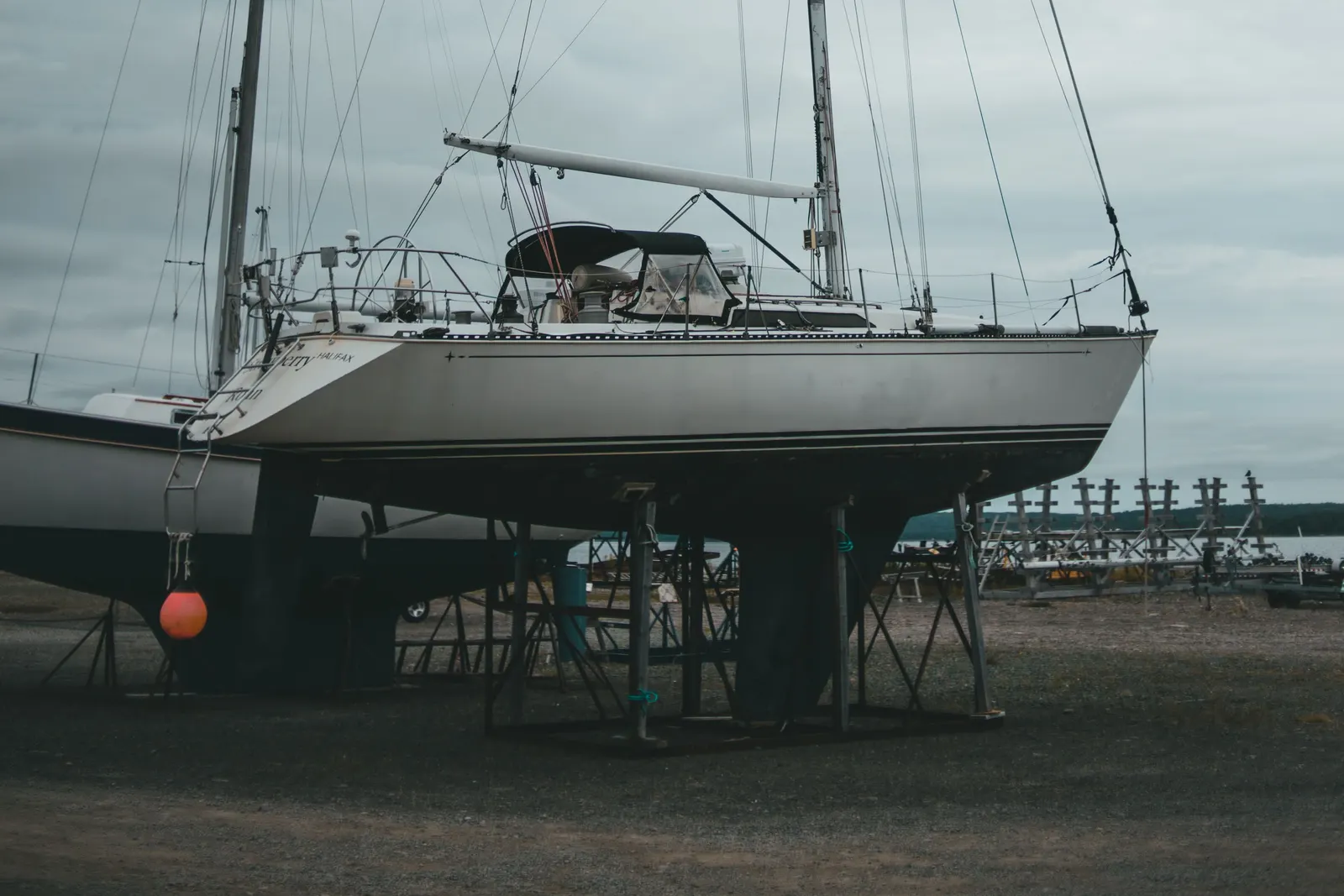
Inspect the hull out of the water. On the hardstand, sight along the topsides for unfair panels or hard spots that suggest internal structure has moved. Look at the bottom for blisters under the antifoul, which can indicate osmosis in older GRP hulls, and check the rudder for play in its bearings and for water weeping from the blade after it has been out of the water for a day.
The keel deserves the most attention. Practical Boat Owner's checklist of warning signs includes rust staining or weeping around the keel bolts, cracks at the hull-to-keel joint, cracks or delamination in the keel floors and matrix inside the boat, and bolts that turn when tightened. Many bolted keels show a hairline crack at the front or back of the joint, often called a smile. On some designs it is simply the fairing compound flexing. On others it means the joint is moving, the bolts have stretched or a grounding has strained the structure. Only a closer look can tell the difference.
Inside, lift the sole boards and look at the keel bolts, nuts and backing plates, and at the floors and grid around them. Fresh paint or filler over bolts or floors is a reason to ask questions. So are sole boards or doors that no longer fit, which can indicate the hull has changed shape.
Tip: Australian Sailing's Special Regulations require a structural inspection of the keel and hull out of the water every 24 months for boats racing in categories 1 to 3, and an inspection by a qualified person after any unintentional grounding. Ask whether the boat has those records. They are useful evidence even if you never plan to race.
Deck core moisture
Most production yachts have decks of fibreglass skins over a core of balsa or foam. Every stanchion base, track, winch, cleat and chainplate is bolted through that core, and if the sealant has failed, water gets in. In a balsa core it rots, and the deck goes soft and heavy.
Walk the deck and feel for flex underfoot, especially around the mast step, stanchions and genoa tracks. Tap the deck with a plastic hammer: a dull note where the rest of the deck rings suggests the skin has separated from the core. A surveyor will use a moisture meter, which is useful for locating wet areas, but readings need interpreting. Core repairs are expensive, and they cost more the larger the wet area is.
Chainplates and standing rigging
The chainplates carry the rig's load into the hull. Where they pass through the deck they can leak, and water running down them can corrode the plates and rot the bulkheads or knees they are bolted to. Look for rust staining, swollen or stained timber and any sign the plates have moved. On older boats, a surveyor may recommend pulling a chainplate to inspect the hidden section.
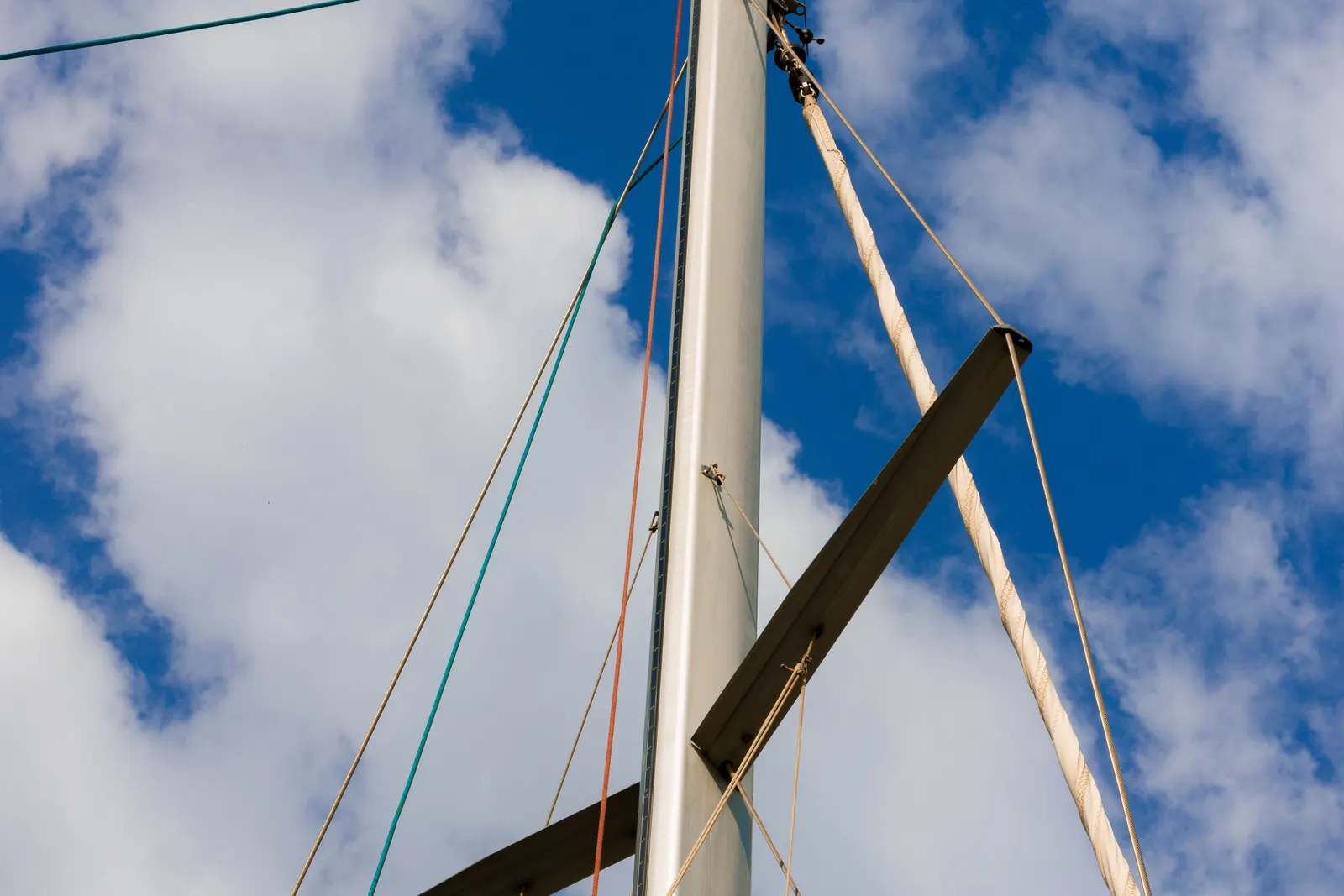
Standing rigging (shrouds, stays and their fittings) has a finite life, and the age of the wire matters to insurers as well as to you. There is no single rule. Practice differs between insurers and between policies, so ask your insurer before you buy. Owners in Australia commonly report insurers asking about rigs more than about 10 years old, then requiring a rigger's report or replacement, or limiting cover for rig damage. Pantaenius in Germany, for example, says it requires a rigger's inspection once a rig is more than 15 years old and replacement when an original rig is on a boat more than 25 years old. Riggers quoted in the same April 2025 report suggest replacing stainless wire rigging after 15 years or 20,000 nautical miles at the latest, sooner for rod or synthetic rigging.
Inspect the rig yourself from deck level and budget for a professional rig inspection by a rigger. Look for broken strands, rust bleeding from swaged terminals, hairline cracks in swages, bent or seized turnbuckles, and corrosion where the mast meets the step. If the rig is near replacement age, price a re-rig and factor it into your offer.
Running rigging, winches and deck gear
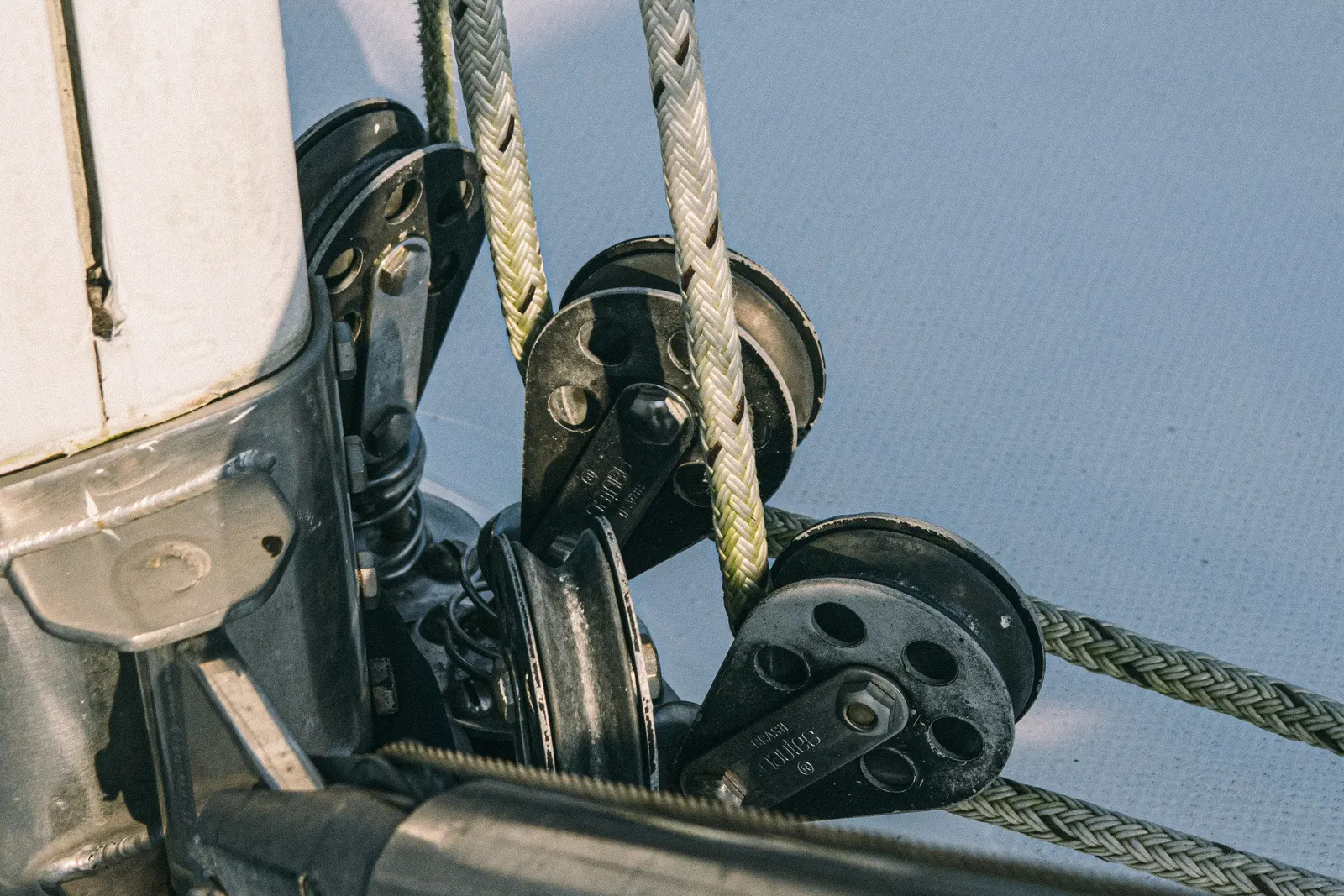
Halyards, sheets and control lines wear quickly and are relatively cheap to replace, but they say a lot about how the boat has been kept. Check for chafe, stiff and UV-faded covers, and cores showing through. Service history matters for winches. Turn each one by hand: they should spin freely and click cleanly. Check that the blocks, clutches, tracks and cars run smoothly, and look for cracks around high-load fittings such as turning blocks and the mainsheet traveller.
Roller-furling headsails are almost universal on cruising boats. Unroll and roll the headsail, and look at the drum, the swivel and the foil sections for damage and corrosion.
Sails
Ask for an inventory, then unbag and hoist every sail. Look for UV damage to the leech and foot, broken stitching, delaminating panels on laminate sails, worn batten pockets and repairs. A blown-out sail with a deep draft, a draft that has moved aft, or a hooked leech will make the boat heel more and point lower. A sailmaker can assess the wardrobe in an hour or two, and the report is worth having if a new main or headsail could change your offer by several thousand dollars.

Auxiliary engine and saildrive
Sailing yacht engines run fewer hours than those in motor boats but often suffer from irregular use. Check engine hours against the service records, look for oil and coolant leaks, inspect the exhaust elbow and raw-water pump, and ask when the heat exchanger was last serviced. Start the engine from cold: it should start promptly, settle to a steady idle and produce little smoke once warm.
Many modern yachts use a saildrive rather than a shaft. The drive leg passes through the hull with a rubber diaphragm seal, and that seal has a replacement interval set by the manufacturer. Volvo Penta's interval is commonly cited as seven years. Yanmar's guidance varies by model and era. Find out when the seal was last replaced and check the current service manual for the exact model. Insurers may decline a claim if the manufacturer's schedule was not followed. On a shaft-drive boat, check the stern gland or dripless seal, the cutless bearing and the shaft alignment.
Electrics and gas
Look at the switch panel and wiring behind it. A tidy, labelled installation with marine-grade tinned cable is a good sign. A tangle of domestic cable and household connectors is not. Ask the age of the house batteries and check the charging sources: alternator, shore charger and any solar panels. Shore power installations should be done by a licensed electrician, with a residual-current device.
If the galley runs on LPG, look at the locker, the regulator, the hoses and the solenoid switch. Ask for a current gas compliance certificate from a licensed gas fitter.
Safety gear and Australian Sailing categories
Australian Sailing's Special Regulations set equipment standards for racing boats and are recommended for cruising boats. They group events into categories. If a boat comes with a recent category audit, you know its safety gear has been checked.
| Category | What it covers |
|---|---|
| 1 | Long-distance races well offshore, where boats must be self-sufficient for extended periods |
| 2 | Races of extended duration along or not far from shorelines, or in large unprotected bays or lakes |
| 3 | Races across open water, most of which is relatively protected or close to shorelines |
| 4 | Short races close to shore in relatively warm or protected waters, normally in daylight |
| 5 | Races with limited rescue availability in protected waters by day, or sheltered waters at night |
| 6 | Short races close to the shoreline in protected waters, in daylight with effective rescue available |
| 7 | Short races in sheltered waters, in daylight with effective rescue available |
Category 0, for trans-oceanic races, is defined but its specific requirements are not included in the current edition. Among the equipment rules, a GPS-capable 406 MHz EPIRB is required for categories 1 to 3, and for category 4 when a race goes more than two nautical miles offshore. A liferaft is required for categories 1 and 2. Boats racing in categories 1 to 3 must be audited every year by an accredited equipment auditor.
State law applies whether or not you race. In New South Wales, for example, an EPIRB registered with AMSA and a marine radio are required on open waters two nautical miles or more from shore. Check the expiry dates on flares, the EPIRB battery and the liferaft service, and assume anything expired will need replacing. Our guide to boat licences and registration by state has the links for each state.
Monohull or catamaran
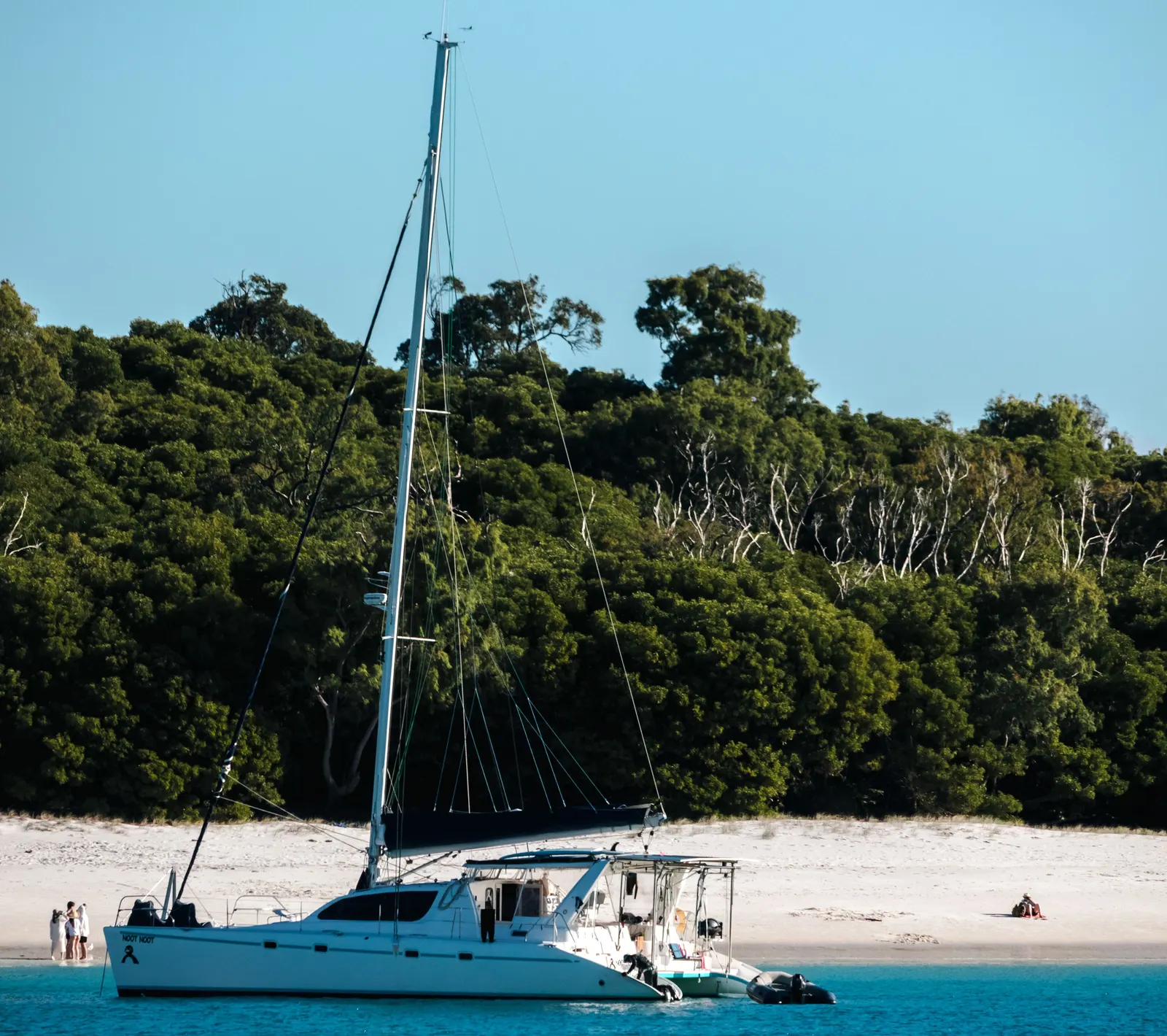
Most of this checklist applies to sailing catamarans too, with some additions. A catamaran has two engines, two rudders and often two saildrives to inspect, as well as the bridgedeck, the crossbeam and the forestay attachment. Look closely for cracking where the hulls meet the bridgedeck. Cats also cost more to berth, as our guide to power catamaran or monohull explains.
A sailing monohull points higher, sails more upright in light air with less space, and is easier to berth. A catamaran sails flat, offers far more living space and suits cruising in places like the Whitsundays, where shallow-draft anchoring is an advantage. It also usually costs more to buy and keep than a monohull of the same length.
Survey and sea trial under sail
Make your offer subject to a satisfactory survey and sea trial, with a deposit that is refundable if either is unsatisfactory. Choose an independent surveyor who knows sailing yachts. Ask whether the survey includes the rig and, if not, commission a separate rig inspection. Haul the boat for the survey: the hull, keel, rudder and saildrive cannot be properly assessed in the water. Our guide to pre-purchase surveys and sea trials covers how to brief a surveyor.
A sea trial should include sailing, not just motoring. In a decent breeze:
- Hoist and set every working sail, and reef the main at least once.
- Sail upwind, tack several times, and note how the boat points and whether the helm loads up.
- Bear away and gybe under control, and check the vang, traveller and preventer arrangements.
- Furl and unfurl the headsail under load.
- Run the engine at cruising revs for at least 30 minutes, then check for leaks, overheating and smoke.
- Check the bilges for water after a period of hard sailing.
- Test the autopilot, instruments, radio and navigation lights.
Note: Do not let a rig, sail or engine issue found on a sea trial be dismissed as minor. Ask for a quote and adjust your offer, or ask the seller to fix it before settlement.
When you are ready to look, browse search by sailing monohull and sailing catamaran. For financing and cover, see boat finance and insurance, and if the boat is overseas, read importing a boat into Australia.
Sources
- Australian Sailing, Special Regulations Part 1 for Racing Boats and Recommended for Cruising Boats (updated August 2026)
- NSW Government, Waterways safety equipment checklist
- Practical Boat Owner, How to check keel bolts
- Practical Sailor, Keel bolt inspection and repair
- Yacht (yacht.de), Insurance - how old can the rig be? (April 2025)
- Sailboat Cruising, The saildrive debate - Volvo Pentas and the seven-year seal rule
- Afloat, Tips for selling (gas compliance and survey conditions)
Information is general and current at the time of writing. Check with the authority or a professional before you rely on it.