Power catamaran or monohull: how to choose
Stability, space, fuel, berthing costs, handling and resale compared, with marina rates and the power-cat builders to know in Australia.
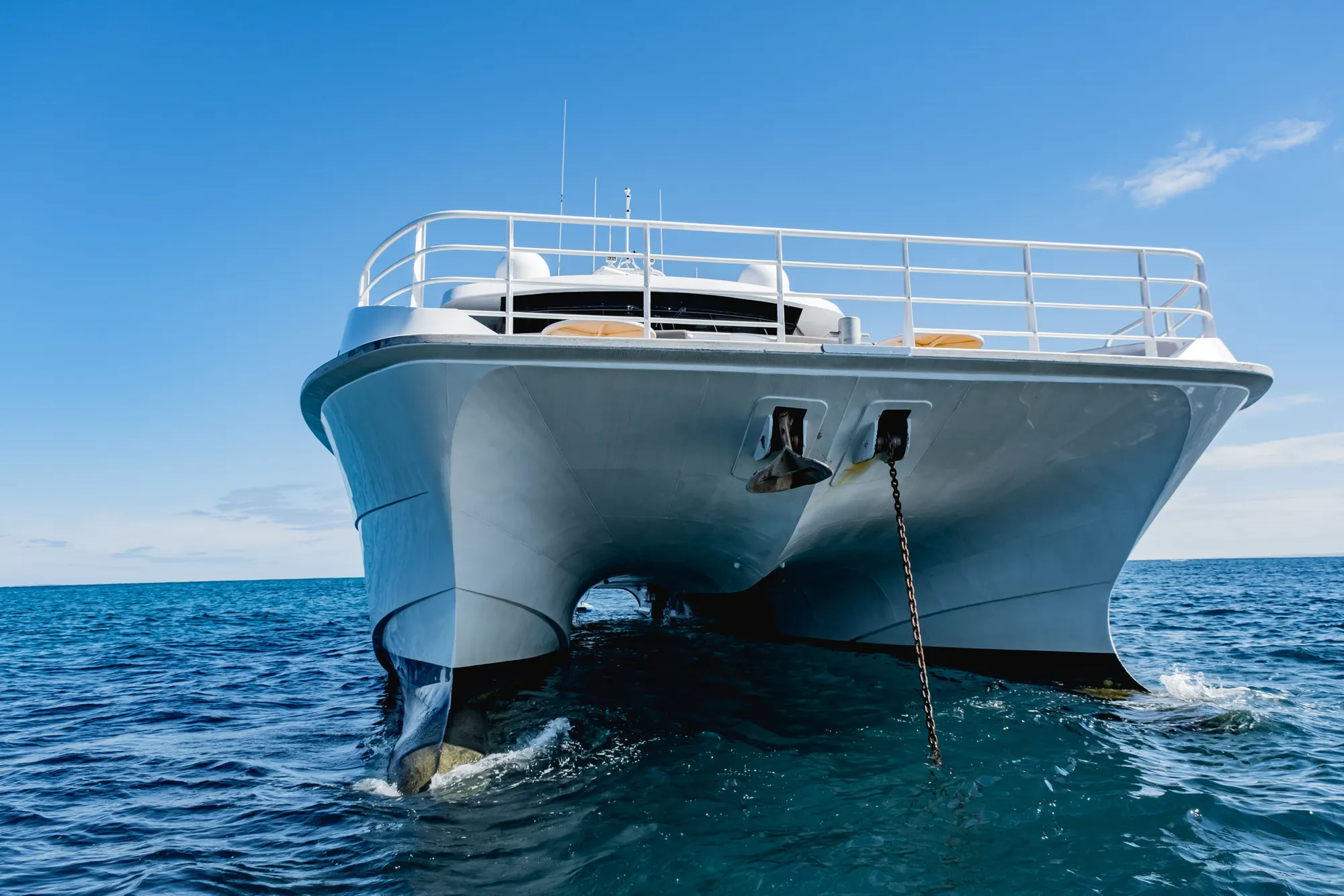
Power catamarans have moved from niche to mainstream in Australia over the past decade. Leopard, Aquila and Fountaine Pajot now sell their power models through local dealers, and you will see them at every major boat show. Yet the monohull motor cruiser still dominates marinas and the used market. Both are good boats. They are good at different things, and the differences cost real money once you add berthing, fuel and resale.
This guide compares the two on stability, space, efficiency, berthing, handling and resale, using builders' specifications and published marina rates as of October 2026.
How the two hulls differ
A monohull motor cruiser gets its stability from beam and a V-shaped hull that sits deep in the water. Most production cruisers from 10 to 20 m are planing or semi-planing designs that lift and skim at speed.
A power catamaran spreads its displacement across two slender hulls joined by a bridgedeck. The wide stance gives far more initial stability, and each narrow hull is easier to push through the water at moderate speeds. Each hull usually carries its own engine, so the propellers sit far apart.
Those two facts, the beam and the slender hulls, explain almost everything that follows.
Stability and motion
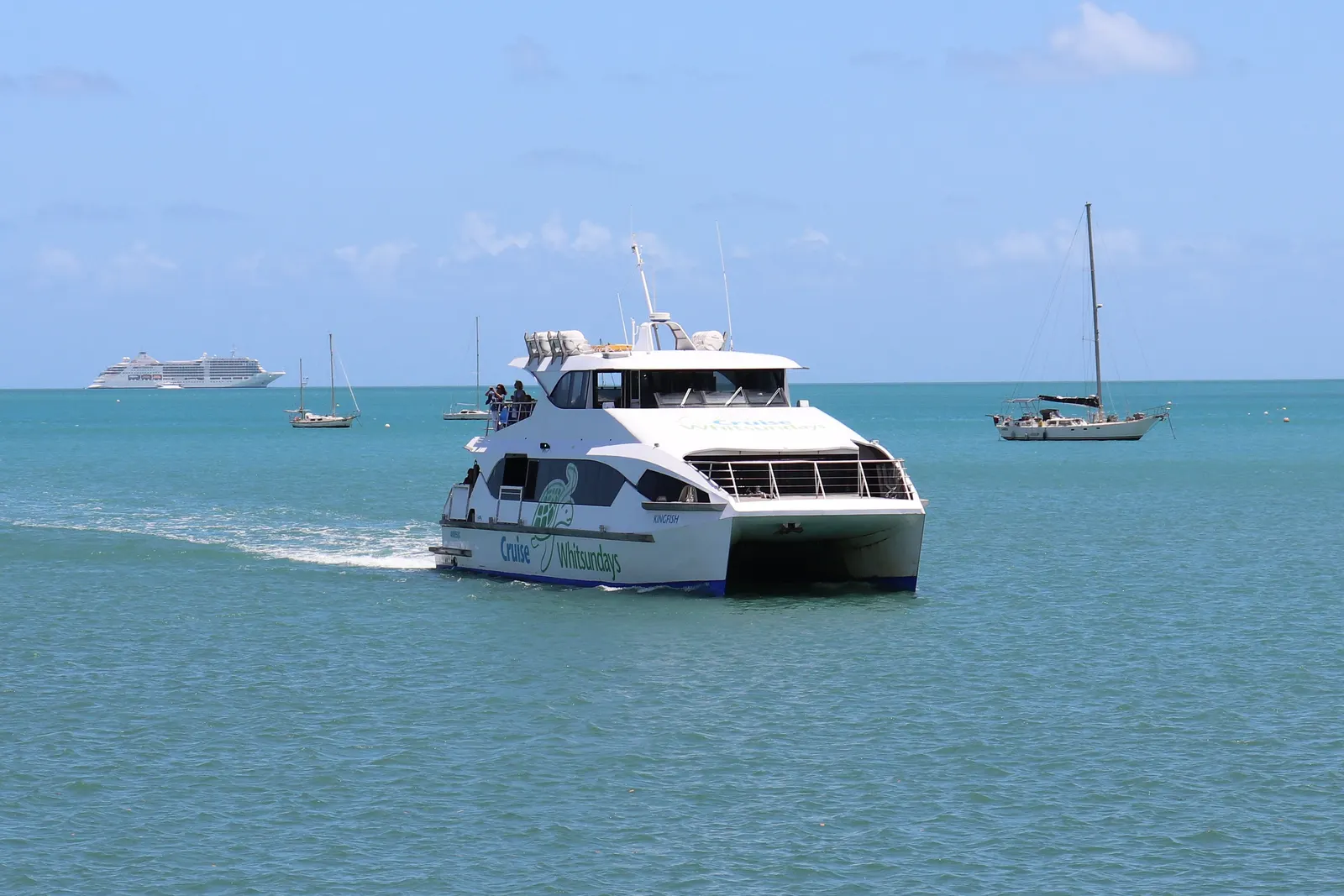
At anchor the catamaran's advantage is obvious. It sits flat, drinks stay on the table, and there is none of the slow side-to-side roll that makes a monohull uncomfortable in a swell wrapping into an anchorage. For families, guests prone to seasickness and anyone who spends nights in open bays around the Whitsundays or Moreton Bay, that alone can decide the matter.
Underway the picture is more mixed. A catamaran rolls less, but it can have a quicker, jerkier motion in a beam sea because it tries to follow the wave surface. In a short, steep head sea the underside of the bridgedeck can slam if clearance is low. Good designs keep the bridgedeck high, and a skipper who slows down will avoid most of it.
A monohull rolls more but with a slower, more predictable motion, and a deep-V hull at speed handles a head sea well. Modern gyro stabilisers have narrowed the gap at anchor considerably, at a cost in purchase price, weight and power.
Space
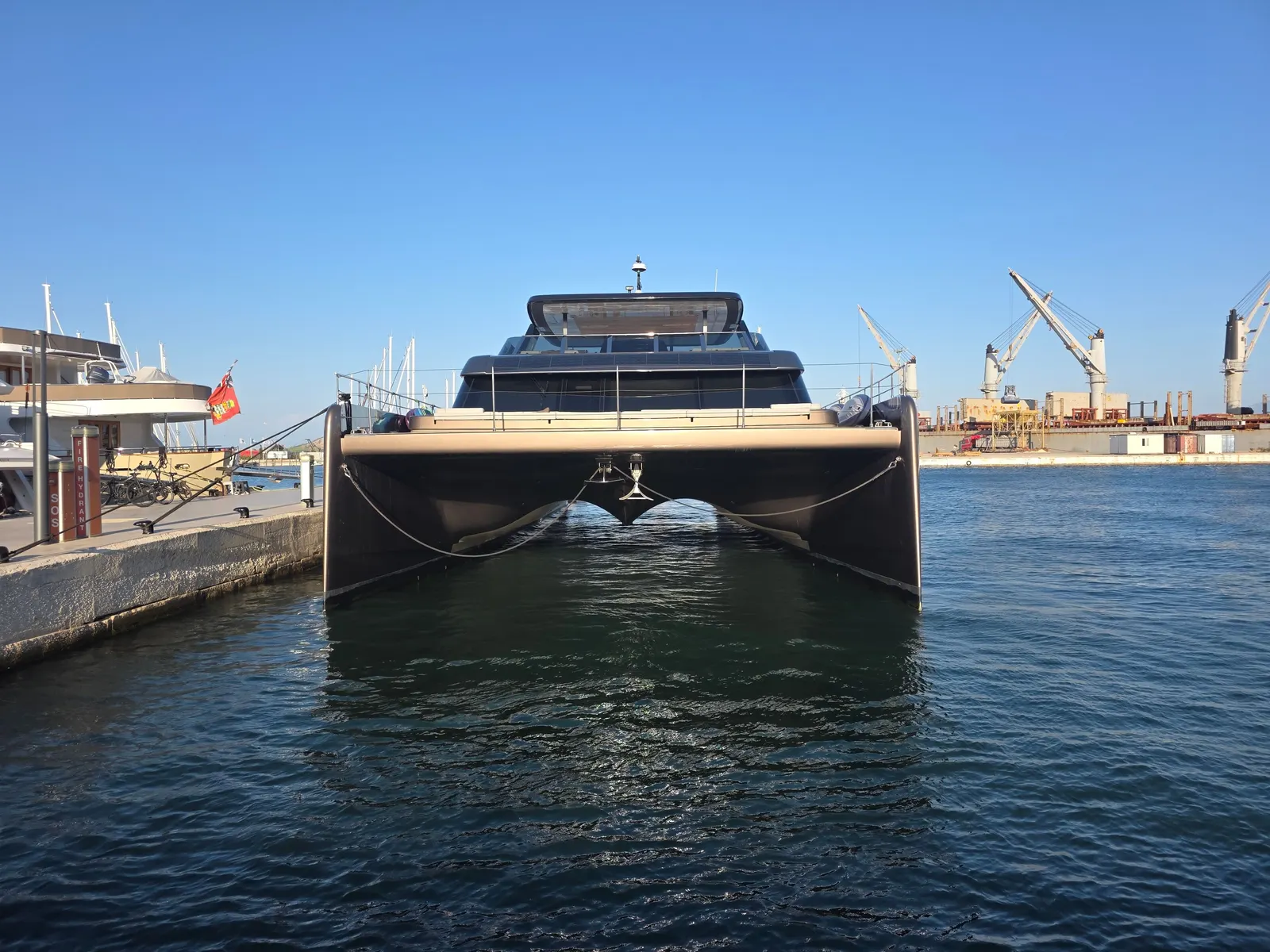
Beam is where the catamaran pulls ahead. Leopard's 46 Powercat is 14.13 m long and 7.34 m wide. A monohull of similar length is typically around 4.5 to 5 m wide: Mooloolaba Marina's 15 m monohull berths, for example, take a maximum beam of 5 m. The difference is a saloon and galley on one level with all-round windows, a cockpit you can fit a table and a crowd into, a flybridge that spans the full width, and cabins in each hull separated by the saloon, which gives guests real privacy.
A monohull of the same length usually has a deeper, narrower interior, with cabins under the saloon and a single central companionway. It feels more like a house built downwards than outwards.
Efficiency and range
Slender hulls make less wave resistance, so at displacement and moderate cruising speeds a well-designed power cat usually burns less fuel than a heavier monohull of the same length and carries it further. Speed matters more than anything else. A published review of Fountaine Pajot's 11 m MY4.S, which carries 1,200 litres of fuel, gave its range as about 1,600 nautical miles at five knots, more than 1,000 at six knots, and about 400 at 18 knots.
The advantage shrinks as speed rises and as weight grows. Power cats are sensitive to load: pile on water, fuel, tenders and toys and the efficiency falls away quickly. Comparisons between a light catamaran and a heavy monohull also flatter the cat. Ask for the builder's fuel curve at the speed you will actually cruise, and confirm it on a sea trial with the boat loaded as you would load it.
Beam and berthing costs
This is the catamaran's biggest running-cost penalty in Australia. Many marinas have only a few berths wide enough, and they charge a premium for them, either through a dedicated multihull rate or by multiplying the standard rate.
| Marina | Monohull berth | Multihull berth | Rule |
|---|---|---|---|
| Calypso Bay, Qld (from 1 July 2025) | 15 m: A$1,225 a month | 15 m multihull: A$2,150 a month | Excess beam: standard rate x 1.75 |
| Mooloolaba, Qld (from 1 July 2026) | 15 m, 5.0 m beam: A$1,510 a month | 15 m, 8.0 m beam: A$2,249 a month | Separate multihull berths |
| Royal Melbourne Yacht Squadron, Vic | Standard casual pen rate | 1.5 x standard rate | Catamaran pens |
On those figures a multihull berth costs roughly 50 to 75 per cent more than a monohull berth of the same length. Over a decade that difference runs into tens of thousands of dollars. Availability can be a bigger problem than price, particularly in Sydney. Swing moorings and dry storage are alternatives in some areas. Our guide to marina berths in Australia explains how to find and compare them.
Handling
Twin engines mounted far apart give a catamaran excellent low-speed control. With one engine ahead and one astern the boat will turn almost on its own axis, which makes berthing easier than its size suggests. Having an engine in each hull also gives genuine redundancy: lose one and you can still get home on the other.
The challenges are windage, from the high, boxy superstructure, and width. Judging a 7 m beam into a tight pen takes practice, and in a crosswind the boat can be pushed sideways quickly.
Monohulls with shaft drives and thrusters, or with pod drives and joystick control, can be just as easy to berth, and their narrower beam opens up more berths and more fuel docks. For the drive options see shaft, sterndrive or pod.
Resale
The used market for monohull motor cruisers in Australia is deep, with many comparable boats, which makes pricing easier and selling more predictable. The power-cat buyer pool is smaller and more specialised. Well-known models from established builders hold their value, and demand for them is real. Aquila 44s from 2016 were listed in October 2026 at roughly A$899,000 to A$1,050,000, against about A$1.49 million for a 2023 example. But a less-known or older power cat can take longer to sell, and there are fewer comparable sales to support the price.
If you expect to sell within a few years, check how many comparable boats are on the market today and how long they have been listed. Start with power catamarans and search.
Representative builders
As of October 2026 these are the power-cat ranges most often seen in Australia:
- Leopard (South Africa): 40, 46 and 53 Powercats. The builder quotes a 23.5-knot top speed and a 16-knot cruise for the 46 on its standard twin 250 hp engines.
- Aquila: Yacht range (42, 46, 50, 54), Coupe (42, 46), Sport (32 to 45), Molokai offshore fishing models (28 to 47) and the 70 Luxury.
- Fountaine Pajot (France): the MY4.S, MY5, MY6 and Power 67 are the models you will meet on the used market. The builder's current yacht range offers power versions of its Y70, Y80 and Y120; the Y70 is 22.95 m long and 11.09 m wide.
- Sunreef (Poland): 60, 70, 80 and 100 Sunreef Power, including Eco versions with solar skins and electric drive.
- Australian builders: locally built power cats tend to be smaller, trailerable or fishing-focused, from builders such as Scimitar, which has built power cats since 1997, and AussieCat, which builds the AussieCat and LeisureCat ranges. Larger cruising power cats on the Australian market are mostly imported.
The two side by side
| Power catamaran | Monohull motor cruiser | |
|---|---|---|
| Motion at anchor | Very stable, little roll | Rolls unless stabilised |
| Motion underway | Less roll, can be jerky in a beam sea, possible bridgedeck slam | More roll, slower motion, strong in a head sea at speed |
| Living space for length | Much greater, all on one main level | Less, spread over levels |
| Fuel at moderate speed | Usually lower | Usually higher |
| Fuel at high speed | Advantage narrows | Planing hulls designed for it |
| Beam at about 14 m length | 7.34 m (Leopard 46 Powercat) | Typically 4.5–5 m |
| Berthing cost | About 1.5–1.75 times the monohull rate | Standard rate |
| Low-speed handling | Excellent with widely spaced engines | Good, excellent with pods or thrusters |
| Resale market | Smaller, specialised | Deep, many comparables |
Who each suits
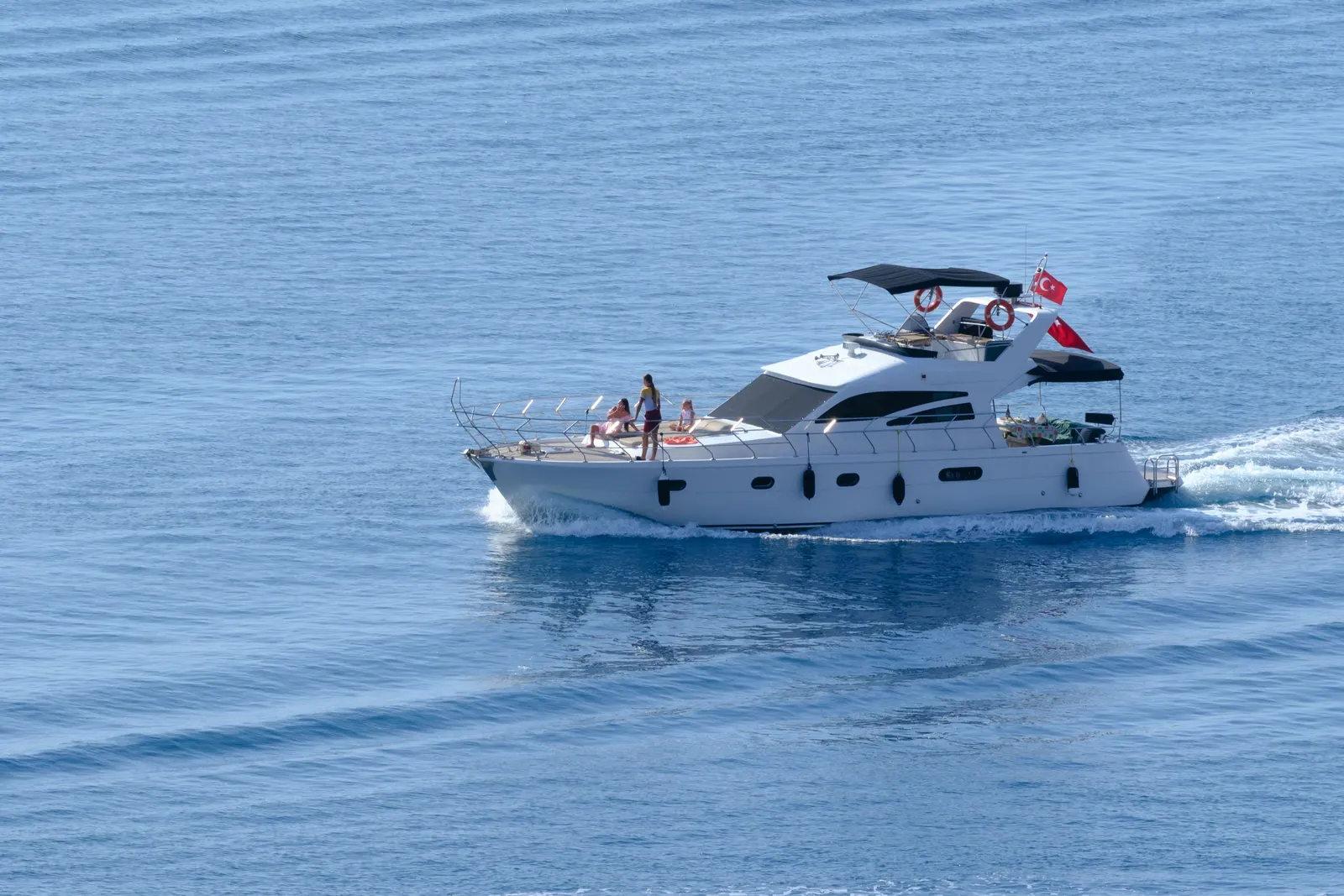
Choose a power catamaran if you spend most of your time at anchor or cruising at moderate speed, carry guests who dislike roll, want long range on modest fuel, value one-level living and can secure a suitable berth at a price you accept. Cats are particularly well suited to extended coastal cruising in Queensland, where anchorages are plentiful and the boat becomes a floating home.
Choose a monohull if you berth in a crowded marina, want the widest choice of boats and berths, cruise at higher planing speeds, or expect to sell in a few years and want a deep market. A monohull with a gyro stabiliser closes much of the comfort gap at anchor.
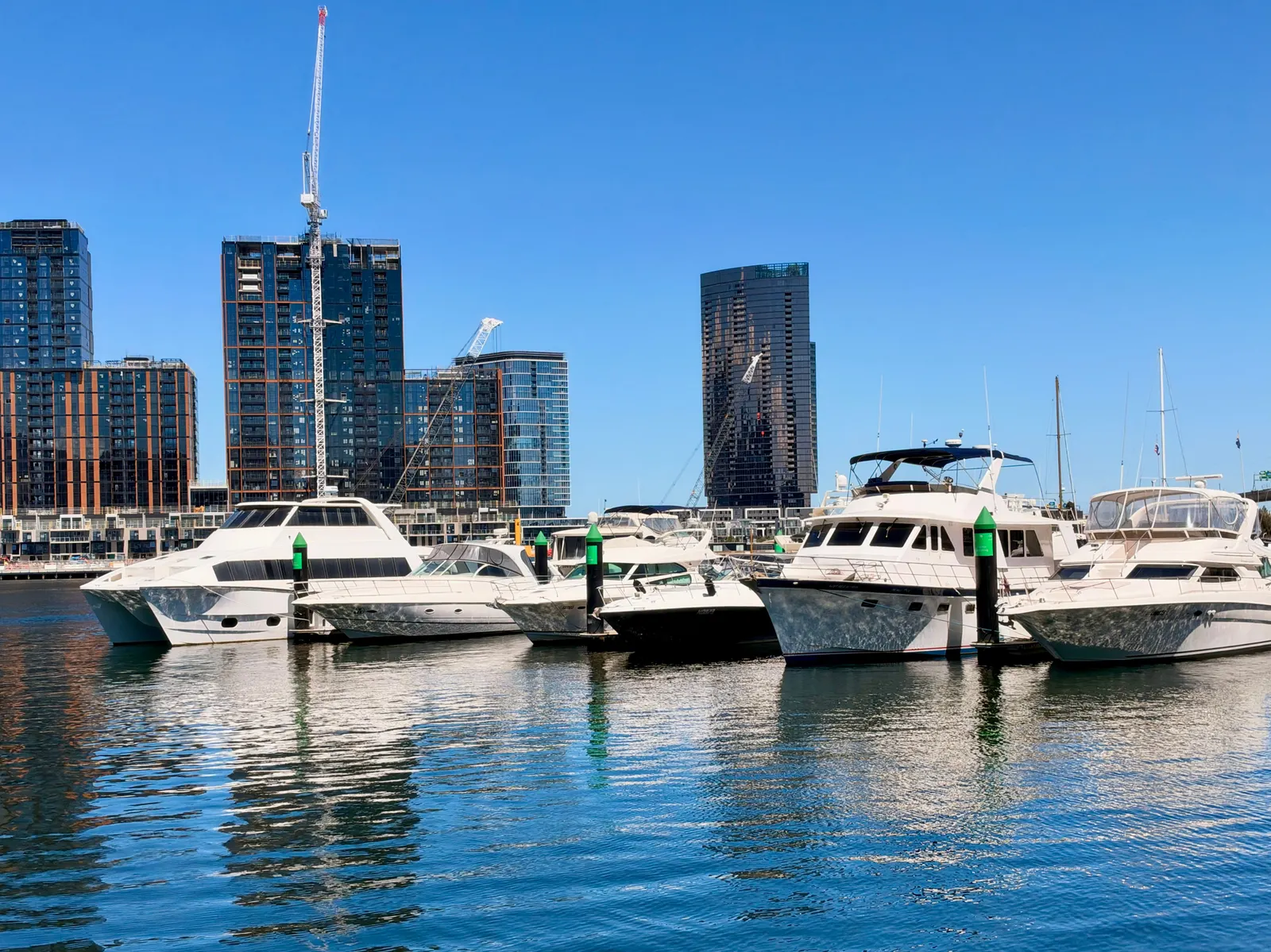
Note: Before you buy either type, confirm you can get a berth. Ask the marina for a written quote for the exact length and beam of the boat you are considering, not a generic size.
Whichever you choose, our checklist for buying a used yacht in Australia and guide to pre-purchase surveys and sea trials apply to both. If you are still choosing between layouts, read flybridge, sports yacht or motor yacht, and for funding and cover see boat finance and insurance.
Sources
- Leopard Catamarans, Leopard 46 Powercat specifications
- Leopard Catamarans, model range
- Aquila Boats, power catamaran range
- Fountaine Pajot Yachts, current range
- Yacht Style, Fountaine Pajot MY4.S review
- Afloat, Mac Marine Group appointed as central agent for Scimitar Power Catamarans
- Calypso Bay Marina, berth rates effective 1 July 2025
- Mooloolaba Marina, berth rates effective 1 July 2026
- Royal Melbourne Yacht Squadron, casual marina berths
- Boats Online, Aquila listings (asking prices, October 2026)
Information is general and current at the time of writing. Check with the authority or a professional before you rely on it.