Flybridge, sports yacht or motor yacht: which layout suits you?
How the three main motor-cruiser layouts differ in space, speed, handling and running costs, with Australian used prices and the models to shortlist.
Walk any Australian marina from Sanctuary Cove to Docklands and most of the bigger motor boats fall into three families: the flybridge cruiser, the sports yacht and the motor yacht. The names are used loosely, and builders blur them on purpose, but each layout makes a different trade between living space, speed, handling and running costs. Choosing the right one matters more than choosing the right brand, because a well-built boat with the wrong layout for how you use it will never feel right.
This guide sets out what defines each type, how they behave in local conditions, what they cost to run and buy second-hand, and which models are worth a look. Prices and model ranges are as of October 2026.
What the labels mean
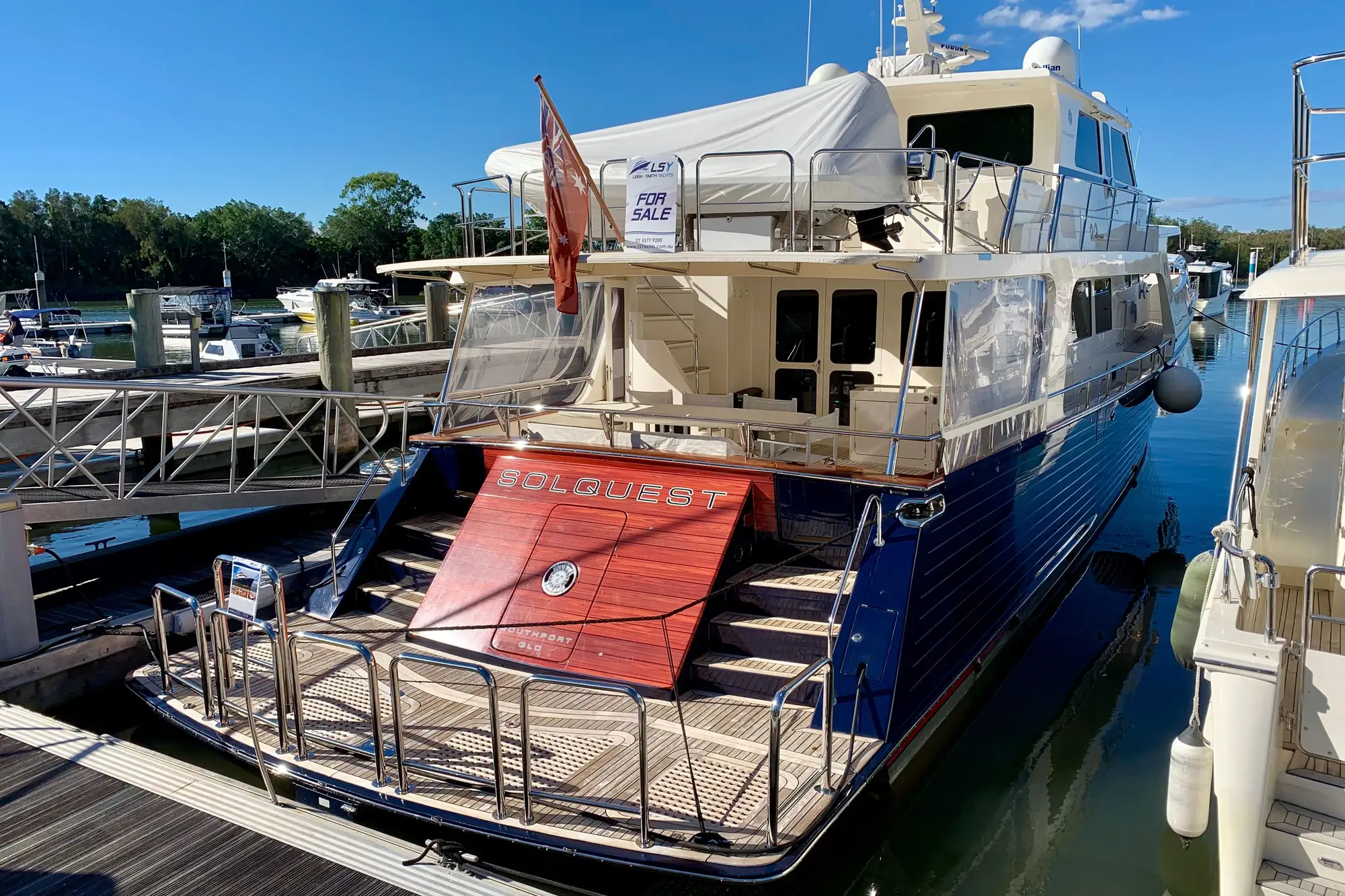
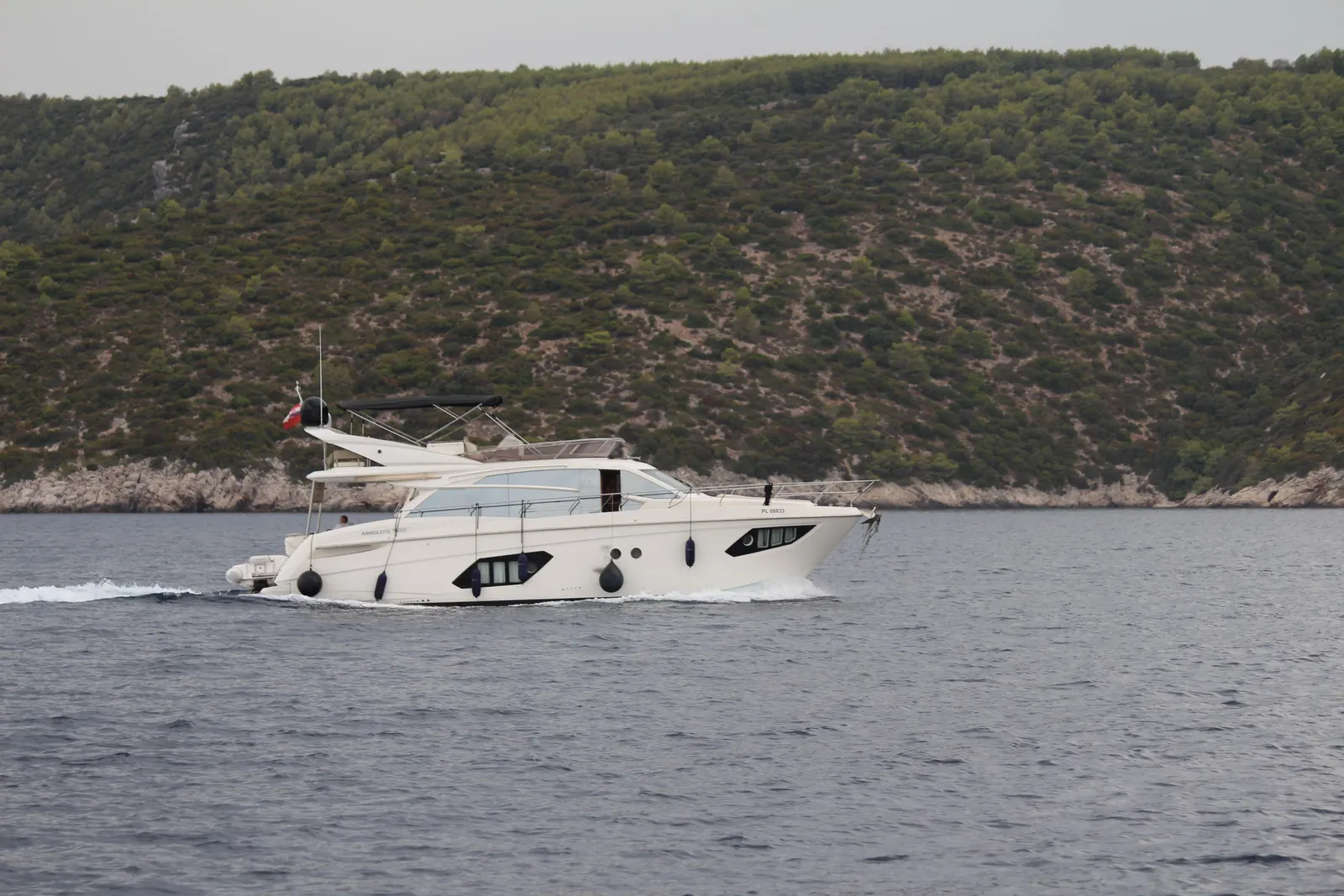
A flybridge cruiser has a second helm station on an upper deck above the saloon, usually with seating, a wet bar and a hardtop or bimini. The main deck has a saloon and galley opening to an aft cockpit, and the accommodation sits below. Riviera's own description of its flybridge models talks about living over three levels, which is a fair summary. Some flybridges are fully enclosed with glass and air-conditioning, as on Maritimo's M-Series, turning the upper deck into a second saloon.
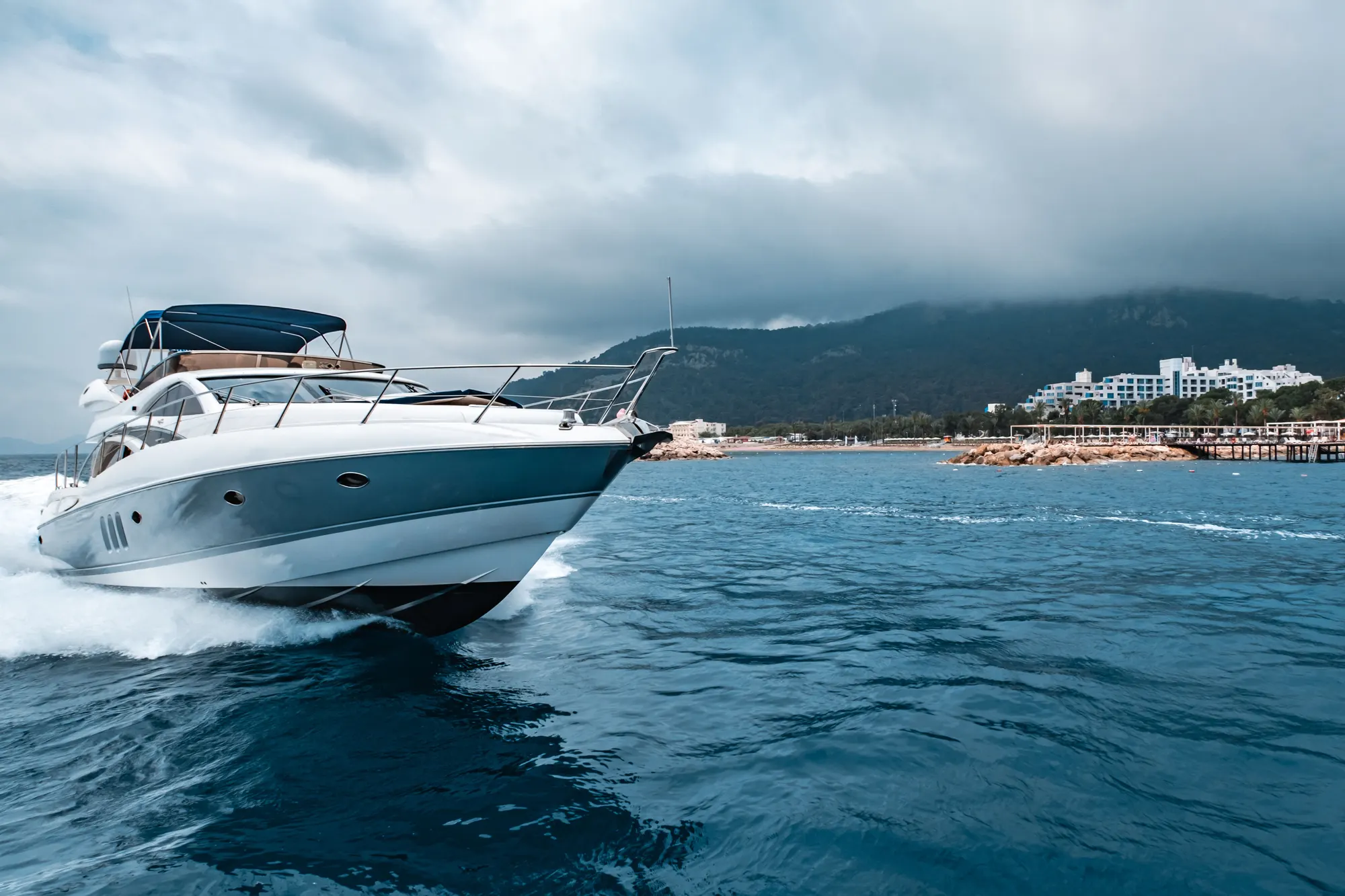
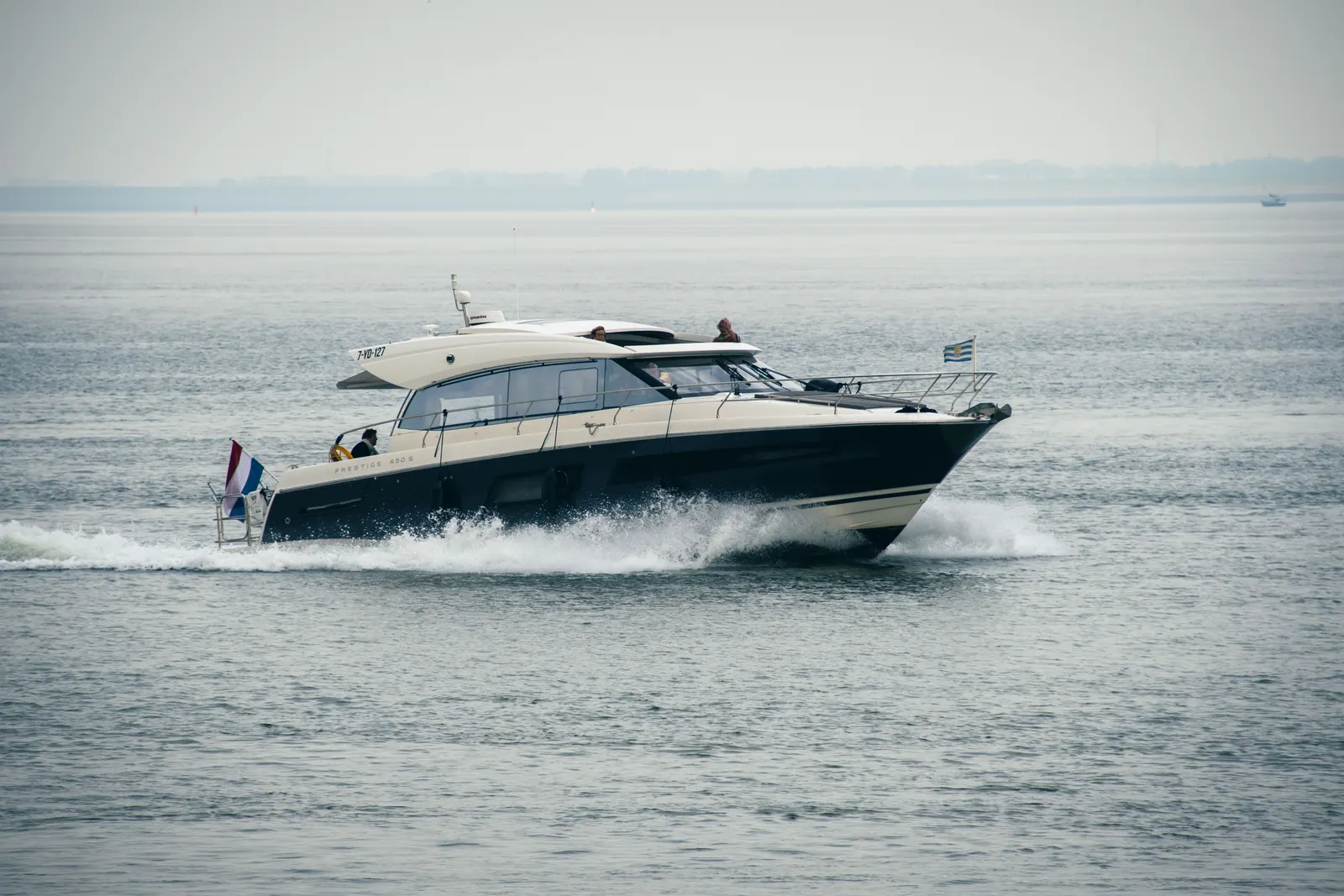
A sports yacht keeps everything on one main level under a hardtop, often with an opening sunroof, with the helm, saloon and cockpit flowing together and the cabins forward and below. There is no flybridge. The hull is usually a deeper, sharper V tuned for speed, and the profile is lower and sleeker. Riviera's Sport Yacht range, Princess's V Class and Sunseeker's Predator and Superhawk lines are typical.
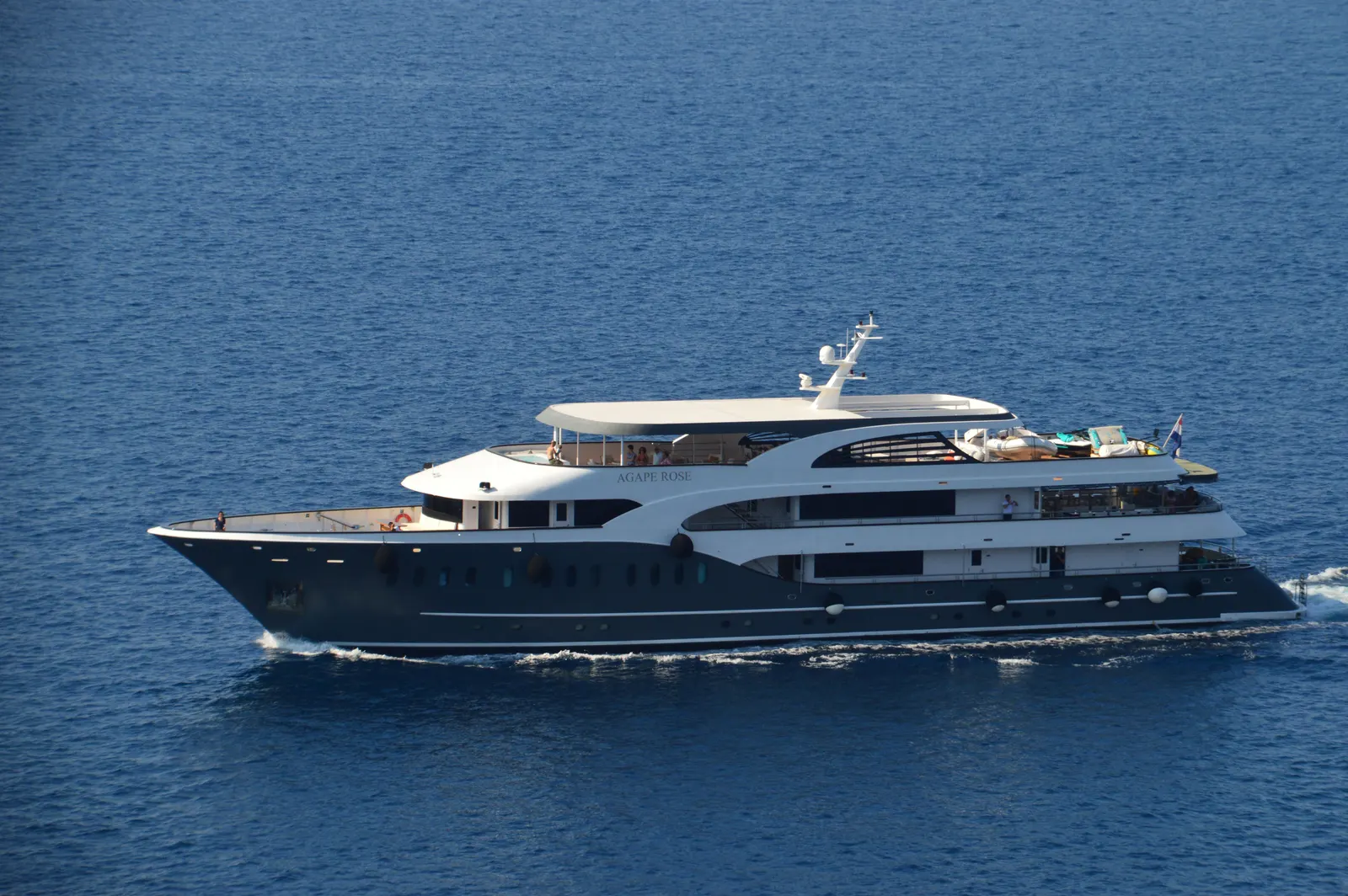
A motor yacht is the larger, heavier end of the spectrum: usually 20 m and up, with a full-beam master cabin, a flybridge or an upper saloon, crew quarters and a long-range focus. Princess's Y Class (72 to 95 ft in the builder's own description) and Azimut's Grande series are the archetypes. Riviera's 78 Motor Yacht with its enclosed bridge deck sits here too.
Between them sit the hybrids. Riviera's Sports Motor Yacht range (46 to 72 ft) is a flybridge cruiser with a mezzanine and a long-range brief. Its SUV range pairs a sports-yacht main deck with a flybridge. Princess calls its S Class a "sportbridge": a lower flybridge set further aft on a deep-V hull. Sunseeker now offers SportFly versions of the Predator 65 and 75. If you are browsing flybridge, sports yacht and motor yacht listings, expect some boats to fit more than one category.
The three types side by side
| Flybridge | Sports yacht | Motor yacht | |
|---|---|---|---|
| Typical length | 12–22 m (40–72 ft) | 12–24 m (40–78 ft) | 20 m (65 ft) and up |
| Decks | Three levels: flybridge, main deck, accommodation | One main level plus accommodation | Three or more, often with crew area |
| Hull | Modified V, cruising focus | Deep V, speed focus | Heavier, seakeeping and range focus |
| Living space for length | High | Moderate | Highest |
| Typical cruise speed | 20–28 knots | 25–35 knots | 12–25 knots |
| Windage | High | Low | High |
| Crew needed | Owner-operator | Owner-operator | Owner-operator or paid skipper |
| Main appeal | Space, views, fishing, family cruising | Speed, style, easy single-level living | Comfort, range, guest space |
The speed figures are typical cruising bands across current production models, not guarantees: engines, load and hull condition move them a lot.
Living space versus performance
For a given length, the flybridge gives you the most usable space. You gain an entire deck, the best views in the harbour, and a helm high enough to see over the bow and read the water ahead. On a 15 m flybridge the upper deck is often where everyone ends up on a summer afternoon.
The cost is height and weight. A flybridge raises the centre of gravity and adds windage, so the boat rolls more at anchor and is more affected by a crosswind in a tight marina. Many owners now fit gyro stabilisers to tame the roll.
The sports yacht trades that upper deck for a lower, lighter boat with a sharper hull. It is usually quicker for the same power, rides better into a head sea at speed, and keeps the whole party on one level, which suits families with small children or older guests who would rather not climb a ladder. The penalties are less outdoor space, a lower helm with a shorter sightline, and, in some designs, a cabin that relies on hull windows for light.
The motor yacht wins on comfort and range. More displacement and more length give a softer ride and a real full-beam master cabin. They also bring higher purchase, berthing and maintenance costs and, at the top end, the need for paid crew.
How they suit Australian conditions
Sun and heat shape more Australian decisions than any brochure. In Queensland and northern New South Wales an open flybridge in January needs proper shade, and that is why enclosed flybridges with air-conditioning have become popular on the Gold Coast and in the Whitsundays. Further south, an enclosed upper deck stretches the season in Melbourne and Hobart.
Fishing pushes many buyers to a flybridge. The height helps you spot birds and bait, and a cockpit at water level with a transom door suits game fishing. Most sports yachts have a smaller cockpit given over to a swim platform and lounges.
Coastal passages are another factor. A run from Sydney to Port Stephens or the Gold Coast to Mooloolaba means open water, a swell from the south-east and often a bar crossing at the destination. A deeper-V sports yacht or a well-designed flybridge handles that comfortably at speed. A heavier motor yacht does it more slowly but with less slamming. Whatever you choose, check the state rules on bar crossings and safety gear, and see our guide to boat licences and registration by state.
Handling and berthing
On a flybridge the high helm gives excellent all-round visibility for skippering, but berthing from up top means judging the stern from a distance. Most boats have a lower helm or a cockpit docking station as well. Windage is the main enemy: a 15 m flybridge sitting beam-on to a 20-knot nor'easter in a narrow fairway needs a confident hand or a good joystick.
Sports yachts are easier to berth single-handed because the skipper can step from the helm to the cockpit in a few paces and the boat presents less side to the wind. Many have pod drives with joystick control, which take much of the stress out of tight berths. If you are weighing drive types, our guide to shaft, sterndrive or pod explains the trade-offs.
Motor yachts above about 20 m usually have bow and stern thrusters, and their owners often employ a skipper, at least for deliveries and berthing.
Running costs
Fuel use rises with weight and speed, so a heavier flybridge or motor yacht will generally burn more than a sports yacht of the same length at the same speed. Slowing down changes the sums more than the layout does: many owners of planing boats cruise at displacement speed on long passages for that reason.
Berthing is charged by length, and sometimes by beam. At Calypso Bay on the Gold Coast, for example, a standard 15 m berth was listed at A$1,225 a month from 1 July 2025, against A$1,000 for 12 m. Height can matter too: some covered berths and dry-stack facilities cannot take a flybridge. Our guide to marina berths in Australia covers the market, and the cost of owning a 15 m flybridge gives a full annual budget.
Maintenance scales with complexity. A flybridge adds clears, upholstery, a second helm and its electronics. A motor yacht adds generators, stabilisers, watermakers and more systems to service. Insurance tracks value and use: see boat finance and insurance.
Sizes and prices on the Australian used market
The figures below are asking prices observed on Australian dealer and broker listings in October 2026. Asking is not selling, and condition, engine hours, refits and electronics move prices a long way, so treat them as orientation rather than valuation.
| Boat (year) | Type | Asking price (A$) |
|---|---|---|
| Riviera 39 Flybridge (2019) | Flybridge | about 895,000 |
| Riviera 45 Open Flybridge (2018) | Flybridge | about 1,149,000 |
| Riviera 4800 Sport Yacht (2018) | Sports yacht | about 1,199,000 |
| Riviera 5400 Sport Yacht (2019) | Sports yacht | about 1,490,000 |
| Maritimo M60 (2010) | Enclosed flybridge | about 1,695,000 |
| Riviera 50 Sports Motor Yacht (2021–2023) | Flybridge | about 1,990,000–2,140,000 |
| Maritimo M64 (2017) | Enclosed flybridge | about 2,850,000 |
| Riviera 58 Sports Motor Yacht (2024–2025) | Flybridge | about 4,190,000–4,590,000 |
Older boats trade far below these figures. A 12–13 m flybridge from the 1990s or early 2000s can cost a fraction of a late-model 45-footer, but budget for engines, electronics and clears that may be near the end of their lives. Imported European sports yachts and motor yachts appear less often on the Australian market than locally built Rivieras and Maritimos, which can make comparable sales harder to find. Run your own comparison in search before you make an offer.
Representative models to shortlist
Current ranges change often, so check builders' sites for the latest line-up. As of October 2026:
- Riviera (Gold Coast): 43 Open Flybridge; Sports Motor Yacht 46, 50, 58, 64, 68 and 72; Sport Yacht 4600 to 6800 Platinum Editions; SUV range; 78 Motor Yacht.
- Maritimo (Gold Coast): M-Series enclosed flybridges (M50, M55, M60, M75); S-Series sedans (S50, S55, S60, S75); Offshore Series M600 and S600.
- Princess (UK): F Class flybridges; S Class sportbridges; V Class open sports yachts; Y Class motor yachts; X Class long-range yachts.
- Sunseeker (UK): Superhawk 55 and Predator 55, 65 and 75 sports yachts, with SportFly versions of the 65 and 75; Manhattan 56 and 68 flybridges; larger yachts from 76 to 100 ft; Ocean range from 82 to 90 ft.
- Azimut (Italy): Fly range from 53 to 82 ft; S series sports yachts; Atlantis and Verve open boats; Magellano long-range cruisers; Grande motor yachts.
- Fairline (UK): Squadron flybridges; Targa sports yachts including the Targa 58 GTO; Phantom 65 sportsbridge.
On the used market you will also see earlier generations of these ranges, and plenty of Australian-built flybridges from builders that are no longer in production.
Who each type suits
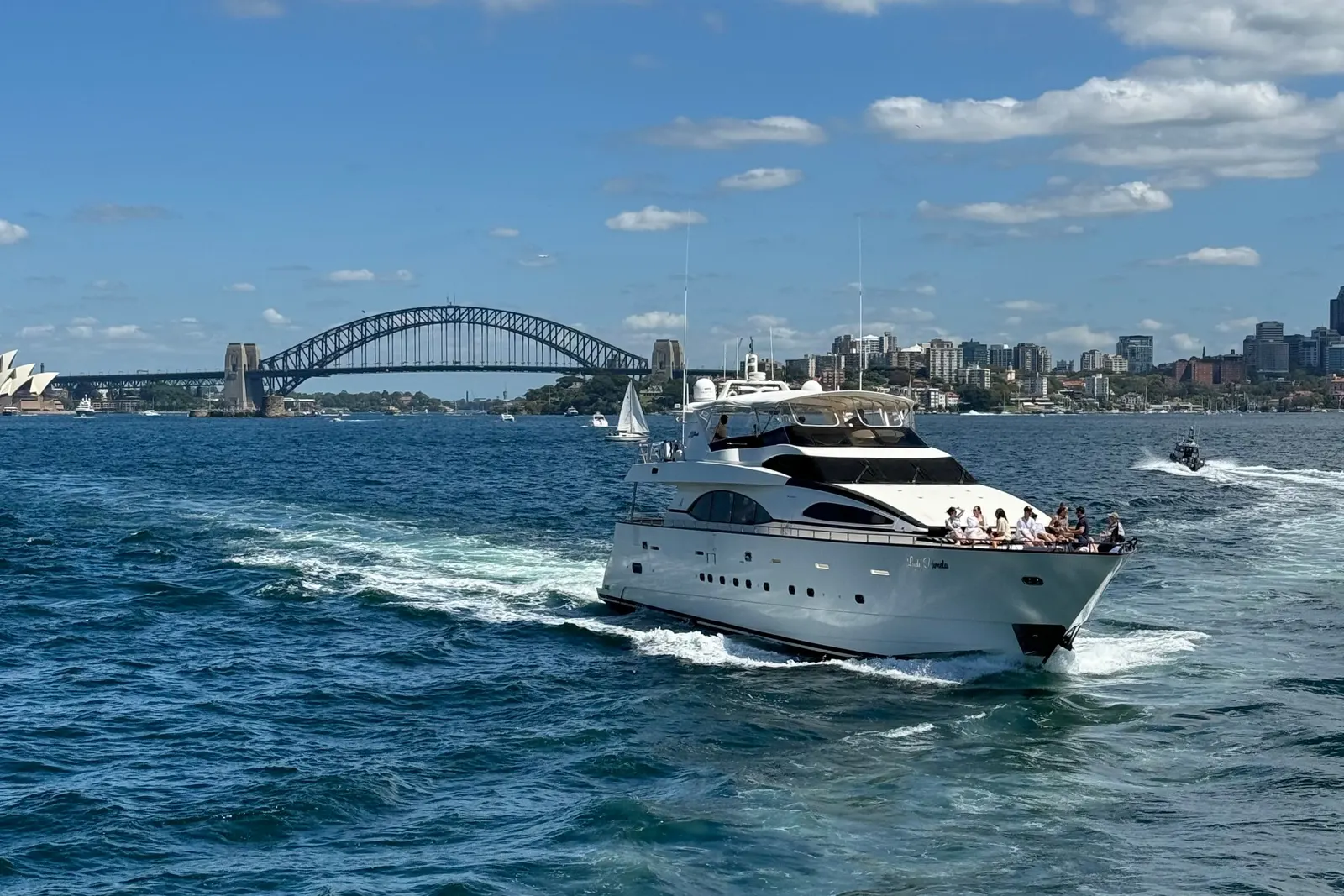
Choose a flybridge if you want the most space for your money, cruise with family or friends, fish, or spend weekends aboard. It is the most versatile layout, and the most common one on the Australian used market, which gives you plenty of choice.
Choose a sports yacht if you value speed, style and simple single-level living, often run the boat as a couple, want an easier berthing experience, or need to fit under a height limit. Expect less outdoor space and a smaller cockpit.
Choose a motor yacht if you plan longer passages, entertain larger groups, or want the comfort only displacement and length provide, and you are ready for the budget, berth and possibly the crew that come with it.
Tip: Spend a day on each type before you commit. Charter or ask a broker for a sea trial on a comparable boat, and include a berthing in a breeze.
Whichever layout you choose, a used boat stands or falls on its condition. Read our checklist for buying a used yacht in Australia and our guide to pre-purchase surveys and sea trials before you sign anything. If you are deciding between hull types rather than layouts, see power catamaran or monohull.
Sources
- Riviera Australia, Sports Motor Yacht collection
- Riviera Australia, Sport Yacht collection
- Riviera Australia, Flybridge collection
- Maritimo, model ranges
- Princess Yachts, A fleet retrospective by product line (January 2022)
- Sunseeker, model ranges
- Azimut Yachts, collections
- Fairline Yachts, model ranges
- Boats Online, Riviera Sports Motor Yacht listings (asking prices, October 2026)
- Boats Online, Maritimo listings (asking prices, October 2026)
- Boats Online, R Marine Crawley dealer stock (asking prices, October 2026)
- Calypso Bay Marina, berth rates effective 1 July 2025
Information is general and current at the time of writing. Check with the authority or a professional before you rely on it.